Ancient fossil may reveal animal kingdom's earliest right-handedness at 550 million years old

Scientists have uncovered what may be the earliest evidence of "right-handedness" in the animal kingdom, dating back more than half a billion years. The discovery comes from the fossil record of Spriggina floundersi, an organism from the Ediacaran Period that lived about 550 million years ago.
Hidden deep-sea turbulence could alter climate and fisheries within one lifetime
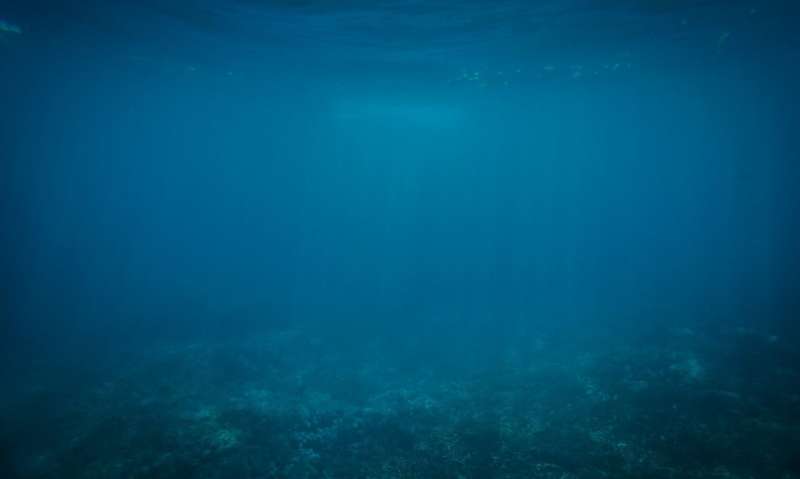
Tiny, invisible swirls and twirls—not much bigger than a coin—deep below the ocean's surface are silently shaping some of the biggest forces shaping our climate: sea level rise, fisheries collapse, extreme flooding and how much carbon dioxide the ocean absorbs.
Artemis II astronauts reunite with their moonship 3 months after record-breaking flight

The Artemis II astronauts reunited with their capsule Wednesday three months after flying around the moon and traveling deeper into space than anyone in history.
Young giant gas planet Beta Pic B refuses to reveal its origin

The young planetary system of the 23-million-year-old star Beta Pictoris (short: Beta Pic) is regarded as an iconic circumstellar dust disk, which hosts at least three giant gas planets. Discovered in 2008 by direct imaging, Beta Pic b is the most massive of those planets, measuring approximately 11 Jupiter masses. It orbits its host star on a wide trajectory, taking about 23 years for one revolution.
Scientists finally solved a 150-year-old gallium mystery
Nearly 150 years after gallium was first discovered and added to the periodic table, scientists at the University of Auckland have uncovered previously unknown details about the metal's atomic structure and behavior.
Manganese risk in groundwater affects 200 million people, study shows

Manganese is an essential trace element. However, in excessive concentrations, the metal can cause health problems. Two Eawag researchers have now produced a global risk map for manganese in groundwater. Half of the world's population uses groundwater as drinking water. According to the study, between 180 million and 220 million people could be using water with elevated manganese concentrations as drinking water—significantly more than previously thought. Densely populated regions of Asia are particularly affected.
Fertilizers carry a hidden cost for soil's crucial microbes. Using less might pay off for farms in unexpected ways

Across North America, in places such as Illinois, Iowa and Texas, farmers are busy growing the crops the world depends on for food, fuel and fiber.
Maize-fed animals may have helped Maya farmers solve corn's protein deficiency

Maize (corn) is a major dietary staple in Maya communities past and present because of its reliability, potential for surplus, and suitability as both food and fodder. It became so important to ancient Mesoamerican communities that it even became central to many of their religious beliefs, and arguably, they built their societies on it. Yet maize has a major nutritional limitation.
Study shows why comfort at home is more than a temperature issue

Feeling hot at home may seem like a simple matter of temperature or whether the air conditioning is switched on. But a new study suggests that less visible factors—from closed windows and blocked airflow to household routines and the different ways family members experience heat—also play an important role.
How climate change affects interactions between owls and their prey

A study published in Ecography has assessed how climate change may be destabilizing interactions between predators and prey in the wild—specifically, how owl–prey interactions have responded to environmental variability and resource availability over 24 years in the semi-arid ecosystem of Bosque Fray Jorge National Park in Chile.