Genome study reveals centromeres as one of the fastest-changing regions in human DNA

A centromere is a specific region on a chromosome that ensures that, when a cell divides, the chromosome separates accurately so each new cell receives the correct amount of genetic material. Despite their essential role, centromeres remain one of the last major blind spots in the human genome.
Twisted magnetic field around newborn star confirms decades-old jet theory

Astronomers using the Atacama Large Millimeter/submillimeter Array (ALMA), of which the U.S. National Science Foundation National Radio Astronomy Observatory (NSF NRAO) is a partner, have captured the first direct, high-resolution images of a magnetic field wrapped tightly around the outflow of gas streaming away from a forming star—evidence that solves a decades-old puzzle about how young stars sculpt the powerful jets that form them.
Why Are Rivers So Mathematical? | Quanta Magazine
A simple scaling law brings order to the chaos of flowing water, rock, and sediment. New findings have extended the law even further.
Introduction

What's the beef with plant-based meat?

Meat eaters view plant-based meat as riskier and offering less value than conventional meat, regardless of how it is marketed, according to new Adelaide University research.
Urban canals can cut temperatures by more than 2°C during heat waves

New research from The University of Manchester has found that urban canals can cool their immediate surroundings by more than 2°C during heat waves.
Potatoes may have given Indigenous Andeans a digestive superpower
For thousands of years, potatoes have been central to life in the Andes. Indigenous Andean communities were the first to domesticate the starch-rich crop, turning it into a dietary staple long before potatoes spread around the world. Now, researchers have found evidence that this ancient reliance on potatoes may also have shaped human evolution.
Greenland glacier break creates new ice island

An international research team partly led by the University of Ottawa reports that Petermann Glacier in northwest Greenland calved a 76.4 km² (29.5 square miles) ice island on Aug. 4, 2026, marking the glacier's largest loss of floating ice since 2012 and the largest Arctic calving event since 2020.
Sixteen AI-designed viruses offer a new route against drug-resistant bacteria

In a world first, scientists led by a team from Stanford University have created 16 viable viruses that do not exist in nature and were designed by AI. Their experiment, which is published in Science, could help in the fight against superbugs by allowing researchers to design customized viruses to kill drug-resistant bacteria. Thomas Inglesby and Moritz S. Hanke have published a Perspective piece on the work and its implications in the same edition of the journal.
Cosmic filaments help set first limits on dark matter's decay into gravitons

Composing some 85% of the universe's total mass, dark matter betrays its presence only through gravity, unlike ordinary matter. Yet through new research published in Physical Review D, a team led by David Dunsky of New York University has proposed a new way to hunt for the elusive substance. Their approach involves searching for the decay of dark matter particles into gravitons: the hypothetical particles thought to carry the force of gravity itself.
Rare Mars meteorite preserves 1.27-billion-year-old clues to planet's deep interior
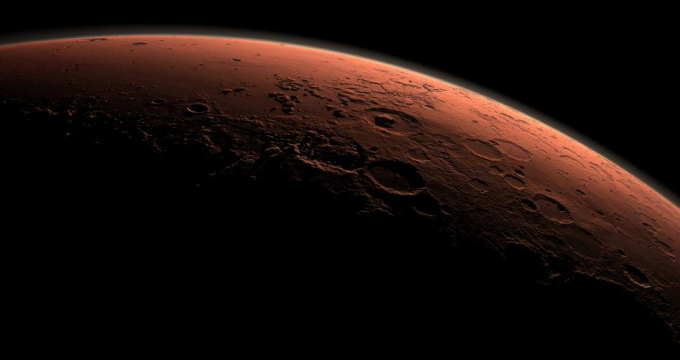
Boston College scientists have determined that a newly discovered meteorite from Mars is 1.27 billion years old and derived from a previously unsampled, pristine source on the Red Planet. The study is published in the journal Geochimica et Cosmochimica Acta.