on
Amber heat-health alerts issued for most of England as temperatures could reach 36C or higher this week – as it happened
From
7h agoAmber heath-health alerts issued for most regions in England from Tuesday to Friday
Andrew Gregory
The UK Health Security Agency (UKHSA) has updated heat-health alerts for nine regions in England, warning that rising temperatures this week may increase health risks, particularly for vulnerable groups.
Amber alerts will be in place for Yorkshire and the Humber, West Midlands, East Midlands, East of England, South East, London, South West and North West regions from 9am on Tuesday 11 August to 9pm on Friday 14 August. The North East will be under a yellow alert during the same period.
Polly Ashmore, acting consultant in Public Health at the UK Health Security Agency, said:
double quotation markIt’s important that everyone is aware of the simple steps they can take to stay safe during periods of hot weather. Drinking plenty of water, avoiding the sun during the hottest part of the day and keeping indoor spaces cool are all things you can do to keep yourself and others safe.
For vulnerable groups including older adults and those with existing health conditions, warmer weather than result in serious health outcomes.
We urge health and social care services to ensure they are prepared and encourage people to check on vulnerable friends and family to make sure everyone is aware of the forecast, follows the necessary advice and stays safe in this period of hot weather.
Key events
11m ago
What happened today
1h ago
Farmers 'struggling to access the water they need'
2h ago
Almost three-quarters of England now in drought
2h ago
More than 120 firefighters fight blaze in New Forest National Park
2h ago
Drought in pictures
3h ago
Afternoon summary
7h ago
Amber heath-health alerts issued for most regions in England from Tuesday to Friday
7h ago
Chessington theme park forced to close due to water outage
7h ago
Firefighters working to put out 'devastating' fire in the New Forest National Park
8h ago
What areas are already officially in drought?
8h ago
Warning of likely impact to health service as amber heat alerts issued for swathes of England
9h ago
More parts of England expected to be declared in drought as fifth heatwave of summer looms
What happened today
Angus Thomson
This is where we will leave our coverage of hot weather and drought across the UK. Thanks for following along.
Here’s what we learned today:
-
Almost three-quarters of England is now officially in drought after four more regions were given drought status. This is the third drought in five years, the UK’s Environment Agency said.
-
The update leaves 27 million people under water use restrictions during a sustained period of hot and dry weather intensified by the climate crisis.
-
The National Farmers’ Union warned the drought could lead to shortages of certain foods in Britain as farmers contend with a “brutal harvest” for crops and a lack of feed for livestock.
-
More than 120 firefighters were battling to prevent a blaze from spreading through internationally protected heathland in New Forest National Park, in England’s south. The blaze threatens a number of rare species including all six UK native reptiles, Dartford warblers, nightjars, insects.
-
The UK Health Security Agency earlier today updated heat-health alerts for nine regions in England, warning that rising temperatures this week may increase health risks, particularly for vulnerable groups.
-
Amber heat alerts will be in place for Yorkshire and the Humber, West Midlands, East Midlands, east of England, south-east, London, south-west and north-west regions from 9am on Tuesday to 9pm on Friday. The north-east will be under a yellow alert during the same period.
-
Temperatures could reach 36C (97F) or higher this week, forecasters have said, with the heat peaking in some areas on Thursday.
Here are a few of the numbers coming out of today’s National Drought Group meeting, which show showing the problems caused by this sustained run of dry and hot weather:
-
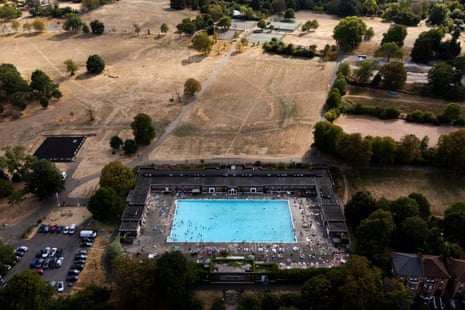
Rainfall totals for July ranged from 1-26% of expected averages. Some parts of Hampshire, Isle of Wight and West Sussex have not had a rain day for 59 days.
-
Natural England noted 245 wildfires have been reported on Sites of Special Scientific Interest (SSSI) this year.
-
Only 14% of rivers are at normal levels. One in five rivers are classified as exceptionally low, including the Avon, Wye, Ely Ouse and Exe.
-
River temperatures continue to rise, including 27C on the River Trent – around 2C higher than expected.
-
England reservoir storage fell 16% last month – the greatest reduction in raw water storage in any July for the last 30 years.
-
Water shortages have caused 26 navigation closures and 19 restrictions across the canal network, with the Canal and River Trust forecasting further closures without significant rainfall in coming weeks.
-
As mentioned earlier, eight water companies have introduced Temporary Use Bans (TUBs), in some or all of their areas, affecting more than 27 million customers.
Water minister Emma Hardy, who attended the National Drought Group meeting on Monday, said the government was stepping up its support for farmers.
This included plans to help farmers build irrigation reservoirs on their land. The government was also investing in new infrastructure such as reservoirs and water transfer schemes to help secure supply, she said.
“We know how challenging this summer has been, especially for our hard-working farmers who are at the sharp end of climate change,” Hardy said.
Farmers 'struggling to access the water they need'
With no meaningful rain forecast in coming weeks, the situation for farmers is becoming dire.
Paul Tompkins, deputy president of the National Farmers’ Union, had this to say:
double quotation mark“Many farmers have completed the earliest harvest on record, with poor yields in key crops reported in some areas of the country. Livestock and dairy farmers are already using winter feed because grass has stopped growing, while growers are working hard to keep fruit and vegetables watered, but many are struggling to access the water they need.
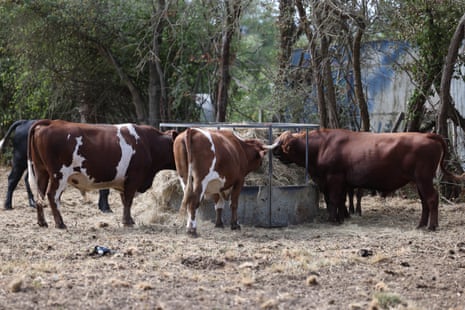
The latest declaration means there are now 45 million people living in regions affected by drought – including 27m under water use restrictions.
Interestingly, temporary use restrictions (such as hosepipe bans) have reduced public demand by up to 9% in some parts of the UK, the Environment Agency said in its statement.
The Horticulture Trades Association has a few tips for hot weather gardening, including:
-
Watering plants in the early morning or evening. This helps plants take on water and reduces evaporation.
-
Mulch when temperatures are lower, allowing the soil to retain moisture and protect against drying gusty winds.
-
Choose drought-tolerant plants such as succulents and herbs, plants with silvery or hairy foliage, and alpines.
-
Use water from washing up bowls, dog bowls, or anything you would otherwise be throwing away.
Remember you can still use watering cans and buckets during a hosepipe ban.
Almost three-quarters of England now in drought

Pippa Neill
After a meeting of the National Drought Group on Monday, four more regions of England were officially declared in drought: the East Midlands, Lincolnshire and Northamptonshire, Kent and East Sussex, and Solent and the South Downs.
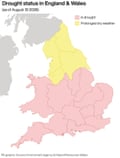
The update means 71.3% of England is now experiencing a flash drought, which is brought about by a combination of very low rainfall and higher temperatures.
England has recorded its driest July since records began in 1836.
You can read more about the declaration below.
More than 120 firefighters fight blaze in New Forest National Park
There are now more than 120 firefighters battling to prevent a blaze from spreading through internationally protected heathland in New Forest National Park, in England’s south.
“We have 10 fire engines and 13 off-road vehicles in attendance, and we plan to maintain this number of vehicles until at least midnight, although it is likely to be required for longer,” a spokesperson for the New Forest National Park Authority (NFNPA) said.
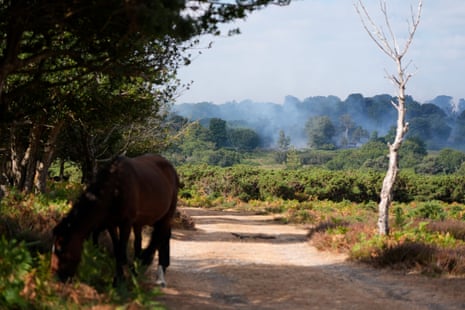
The blaze began when a van caught fire on the nearby A31 dual carriageway on Sunday evening.
Motorists are being diverted from the road which is closed in both directions “until further notice”.
Those visiting or taking diversions on New Forest roads should take extra care “and be aware of roaming livestock”, the NFNPA said.
“New Forest livestock, such as ponies, donkeys and cattle are unpredictable,” the authority said. “Pass wide and slow, be patient with animals and other drivers, and do not honk or rev your engines in an attempt to move them on.”
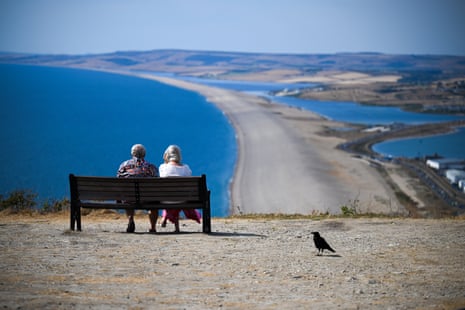
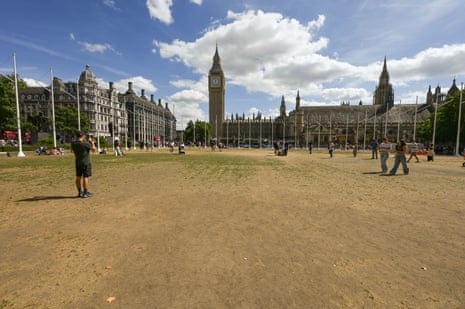
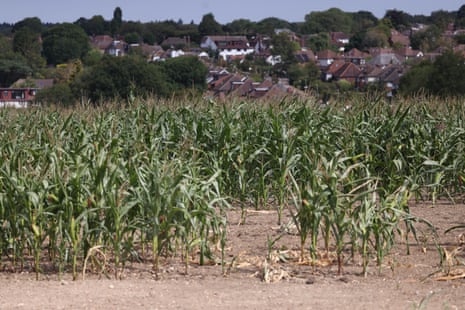
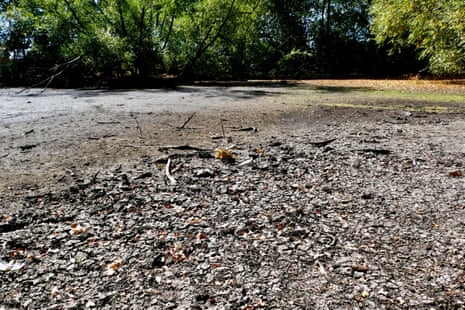
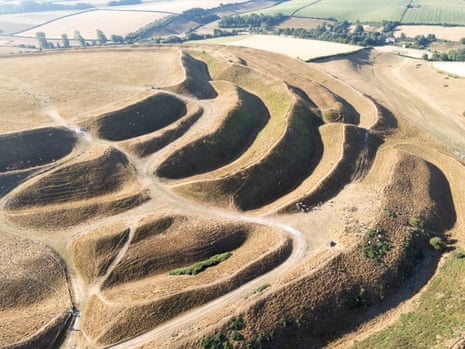
Drought in pictures
While we wait for that official declaration to come through, here are a few more photos coming through of dry conditions across England and Wales.
Afternoon summary
-
Drought is expected to be declared in more areas of England later today as parts of the UK brace for the fifth heatwave of the summer.
-
All of Wales and more than half of England are already in drought after an unprecedented period of dry, hot weather.
-
The National Drought Group, whose members include the government, water companies, the National Farmers’ Union, the Met Office and conservation experts, are meeting on Monday and are expected to declare more regions in England in drought.
-
The UK Health Security Agency earlier today updated heat-health alerts for nine regions in England, warning that rising temperatures this week may increase health risks, particularly for vulnerable groups.
-
Amber alerts will be in place for Yorkshire and the Humber, West Midlands, East Midlands, east of England, south-east, London, south-west and north-west regions from 9am on Tuesday to 9pm on Friday. The north-east will be under a yellow alert during the same period.
-
Temperatures could reach 36C (97F) or higher this week, forecasters have said, with the heat peaking in some spots on Thursday.
-
The extended period of dry and hot weather, intensified by the climate crisis, has led to over 20 million people being subject to hosepipe bans as water supplies are placed under serious strain with rivers and reservoirs running dangerously low.
-
The National Farmers’ Union has warned the drought could lead to shortages of certain foods in Britain, with farmers describing a “brutal harvest” for crops and a lack of feed for livestock.
Polly Ashmore, acting consultant in public health at the UK Health Security Agency, has urged people to take simple steps to stay safe, such as drinking plenty of water, keeping indoor spaces cool and avoiding the sun at the hottest part of the day.
“For vulnerable groups including older adults and those with existing health conditions, warmer weather can result in serious health outcomes,” she said.
“We urge health and social care services to ensure they are prepared and encourage people to check on vulnerable friends and family to make sure everyone is aware of the forecast, follows the necessary advice and stays safe in this period of hot weather.”
We are still anticipating the National Drought Group, whose members include the government, water companies and conservation experts, will declare more areas of England in drought after they have met this afternoon.
Liz Bentley, the chief executive of the Royal Meteorological Society, told BBC Radio 4’s Today programme that she predicted north-west England would be among the areas where drought could be declared later today. You can read this post to see the regions already declared to be in drought.
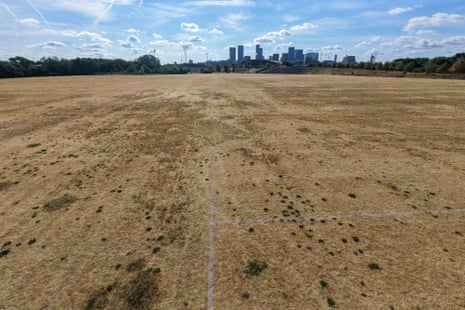
Here are some of the latest images being sent over the newswires as swathes of England and all of Wales experience drought:

Ajit Niranjan
Supercharged by fossil fuel pollution, a string of heatwaves have hit Europe since the end of spring, with particularly brutal heat at the end of June expected to have resulted in more than 10,000 deaths.
The EU’s Copernicus climate change service said widespread dryness observed in May and June intensified last month, with exceptionally low rainfall and soil moisture in much of western Europe.
Across the dry regions, which include France, Spain, and parts of Germany and the UK, low river flows hit water supply, irrigation and power plants, including in countries downstream.
Short of cooling water, two coal-fired power plants were forced to shut in Poland last week, as well as Hungary’s sole nuclear power plant, for the first time in its 44-year history.
Heat and drought are among the biggest environmental threats to Europe’s economy. Early estimates for this summer suggest the June heat cost grain farmers €2bn in lost crops. You can read more here:
Met Office spokesperson Grahame Madge said that, after fresher conditions on Monday, “the heat really comes back in for a time, and will peak on Thursday.
“We’re expecting values to be in the mid 30Cs, and possibly highest in the East.”
Downing Street defended the government’s response to the heatwave and wildfires, with a meeting of the national drought group being held on Monday bringing together ministers, officials and the water companies.
The prime minister’s official spokesperson said:
double quotation markWe know these conditions are having a significant impact on communities, farmers and businesses across the country.
Our climate is changing. Droughts are becoming more common, which is why we’re focused on both the immediate response and long-term resilience.
That includes working through the national drought group with the Environment Agency, water companies, farmers, and environmental organisations to protect water supplies and minimise environmental damage.
And we’re also backing major investment in water infrastructure, including new reservoirs, whilst making clear that water companies must do more to cut leaks and improve resilience.