on
Banished to alien lands – Trump’s secret deportation deals | First Thing
Good morning.
After a plane journey in shackles, an Iranian woman found herself in the middle of Africa in a country she did not know existed. She is one of thousands of people deported from the US on the back of shadowy deals made with dozens of countries.
Human rights lawyers describe these so-called third-country national arrangements as part of a “show of force” by the US, intended to discourage migrants and asylum seekers from entering. People from Peru and Colombia have been sent to the Democratic Republic of the Congo. On 20 August, four Cubans, a Brazilian and a Cameroonian refused to disembark in Liberia, and were sent to Equatorial Guinea instead.
The Guardian joined 23 other media organisations in the Deportation Project, a joint investigation coordinated by Forbidden Stories. The consortium reviewed documents and interviewed more than 100 people on the US drive to extinguish unauthorised immigration.
-
At what scale are third-country deportations happening? Since returning to office in 2025, Donald Trump’s administration has deported more than 25,000 people to countries that are not their own.
-
Which countries are people being deported to? The Trump administration has struck 35 deals allowing it to deport migrants and asylum seekers to countries where they often have no connections.
-
Is this legal? A US federal appeals court ruled on Friday that the Trump administration’s third-country removals policy was unlawful. A three-judge panel unanimously agreed that it violated due process. But the government has 90 days to appeal against the court’s decision, and is expected to do so.
European spy chiefs warn Moscow is planning more decisive action against Nato

European intelligence officials have raised the possibility of an imminent Russian test of Nato, with one saying a potential attack could come in a matter of “months, not years”, the Guardian’s Shaun Walker reports.
The warnings come after Poland’s prime minister, Donald Tusk, told parliament that intelligence assessments suggested Russia might launch an attack with drones or missiles on Nato territory in the coming months.
The escalation fears come as the UN general assembly convenes in New York later this week, and amid intensifying airstrikes on both sides of Russia’s war on Ukraine.
-
How imminent is the threat? Normunds Mežviets, the director general of the VDD, Latvia’s state security service conceded there were signs that Moscow was making preparations for more decisive action in Europe, but said it was not clear whether the plans were simply part of a destabilisation strategy. “It’s still an open question if they have direct and concrete plans or if it’s just within the context of their overall attempts to spread fear and uncertainty in western society,” he said.
Middle East braces for more violence as Iran claims US is planning to renew bombing campaign

Governments across the Middle East are bracing for an escalation of violence after Iran claimed it had received intelligence that the US was preparing for a renewed bombing campaign against it.
Keeping his options open, Trump reportedly told a Fox News reporter “very big things are going to be happening in the not-so-distant future” and that the options he was considering were “wiping Iran out, letting them rot economically or making a deal”.
-
What has Iran said? The Islamic Revolutionary Guard Corps warned that if an attack did take place, “all US bases and interests in the region will become targets of continuous, effective and painful attacks without any limitations or considerations”.
-
What has caused the outburst of sabre-rattling? It appears to have been prompted by attacks on the Saudi capital, Riyadh, by Yemen’s Iranian-backed Houthi rebels. The US largely regards the Houthis as a proxy Iranian force.
In other news …

-
Friedrich Merz, Germany’s chancellor, has vowed to stay in office, despite heavy losses for his conservatives in two state elections, one to the far right and the other to a leftwing party.
-
Gavin Newsom, the California governor, has signed off on a package of bills aimed at bolstering election security, including measures to block federal political interference.
-
Eighteen people have been arrested in association with the assassination of the Haitian president, Jovenel Moïse, who was killed in July 2021, according to US officials.
-
Starbucks workers say their health insurance premiums have soared this year, in some cases more than doubling, according to a survey conducted by Starbucks Workers United.
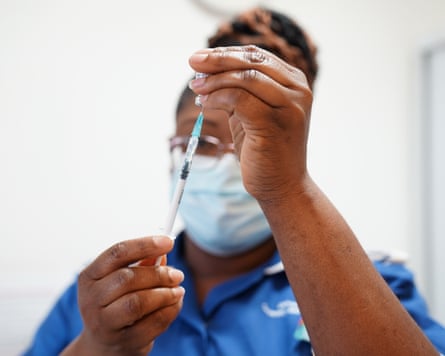
An extra 2.7 million lives could be saved in the next pandemic if countries share vaccines in a less selfish way, a new study has found – although the death toll in richer countries would rise. Researchers modelling a hypothetical global outbreak of flu found that fast-tracking vaccine development could cut deaths from 58.5m to 23.9m.
Building Power: They fought against datacenters. Now they are running for local offices
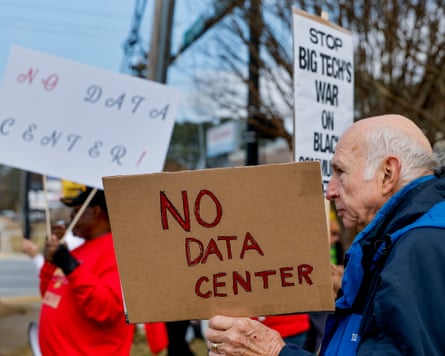
A national datacenter revolt – which has built coalitions between environmentalists and Nimbys, conservatives and democratic socialists – is turning some community organizers into political hopefuls, Claire Wang writes. Dozens of datacenter activists are running for offices held by incumbents that they feel have disregarded issues of affordability, environment destructive and the overreach of tech power.
Don’t miss this: Is culture alive?

“Cultural traditions endure because they share a fundamental property with biological organisms. They are alive. Not metaphorically, but literally,” writes Jonathan Loh for the big idea. “I believe that human culture isn’t just an accidental add-on to organic life; rather, it’s a separate expression of life in its own right.”
Climate check: EPA let Bayer pick regulations for destructive weedkiller, documents show

The Environmental Protection Agency allowed Bayer to pick from a menu of regulation options for the controversial and destructive weedkiller dicamba, internal agency documents reveal – then it put Bayer’s choices into a proposed federal rule. The Center for Biological Diversity has brought a lawsuit over the issue.
Last Thing: ‘I got married in it’ – Guardian readers on their favorite thrifted fashion finds

The anti-poverty charity Oxfam is challenging people to avoid buying new clothes for 30 days and choose preloved pieces instead. The Guardian asked readers about their best thrifted finds. “From a distance it looks pink, but as you get closer you realise it’s swirls of pink dots creating an optical illusion,” Alicia said, of her $5 wedding dress.
Sign up
Sign up for the US morning briefing
First Thing is delivered to thousands of inboxes every weekday. If you’re not already signed up, subscribe now.
Get in touch
If you have any questions or comments about any of our newsletters please email [email protected]