on
Bridges And Roads Are So Fundamental To Human Survival That The Geneva Conventions Protect Them - Jalopnik
Fpg/Getty Images
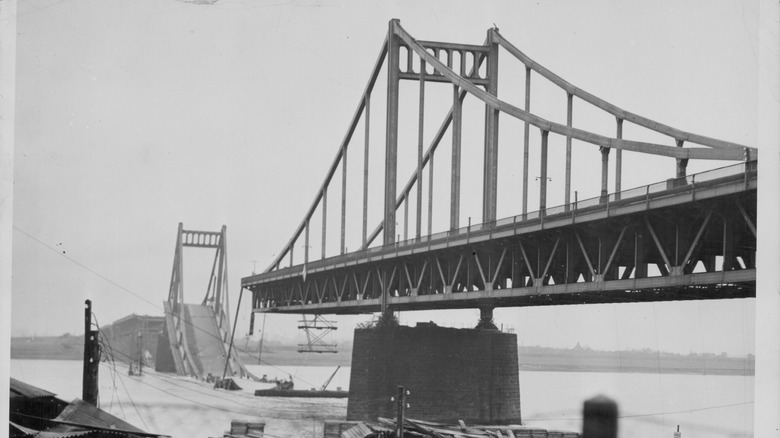
Planes, trains, automobiles, and the infrastructure built to support them are vital to human survival. They're so essential to life that these thoroughfares, like the Strait of Hormuz and its disputed freedom and opening, become massive trigger points in wars. Without them, the people who live or work within cut-off areas can suffer substantially as they are stranded, starved, or basically left to die, similar to how the U.S.-Iran war is stranding soldiers in the Strait. A devastating World War II annihilated many of Europe's bridges and roadways, so much so that nations convened in 1949 to add an entire section to the Geneva Conventions to protect that critical infrastructure. It would ensure many nations' roads and bridges would be protected from being destroyed in war in the future.
But it was a different war that inspired the creation of the Geneva Conventions. Henry Dunant witnessed several human atrocities during the battle of Solferino — a part of the Second Italian War of Independence in 1859. There, the wounded were left behind to die, as there were no real obligations for either side to actually aid them.
Dunant's observations, which he detailed in the 1862 book "A Memory of Solferino," inspired the creation of the International Humanitarian Law and Geneva Conventions in 1864. Both helped establish and enforce protocols to protect individuals caring for the wounded and to ensure the wounded were cared for by either side in a conflict. It also led to the creation of the Red Cross. From there, nations conducted three additional conventions to issue various wartime protections through the Geneva Conventions following World War I, as well as prior to and following World War II.
The decimation of civilian life in World War II's Europe
Historical/Getty Images
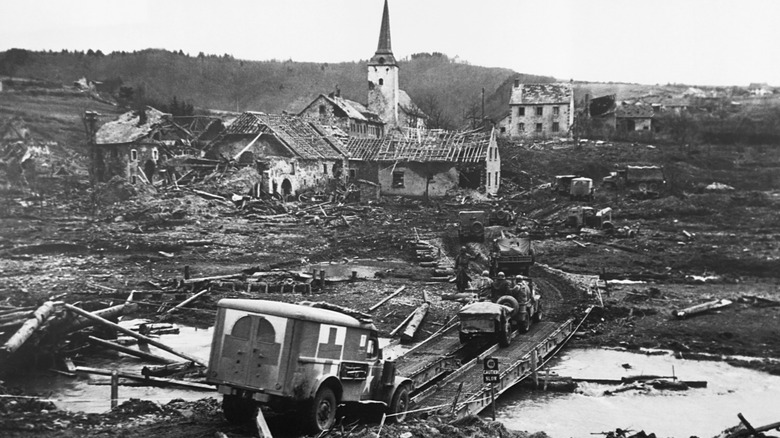
WWII remains one of the worst and most destructive wars in history, not just for its expanse and reach, but for the deaths and demolition that resulted from the fight. This was a war aimed at devastation — with both the Axis and Allied troops resorting to strategies relying on complete and utter destruction of areas.
To win, strategy in this new war focused on civilians. Iain MacGregor, historian and non-fiction author of "The Lighthouse of Stalingrad" and "The Hiroshima Men," told History that these wars of annihilation sought "to destroy the enemy as a state, a society, a ruling class or even a people." For example, in one campaign, the United States Army Air Force (AAF) and Britain's Royal Air Force (RAF) aimed to destroy railroads to cripple German access to vital production. But the German Army's ability to repair damaged railroads quickly led the AAF and RAF to pivot strategy, decidedly aiming to destroy bridges instead. Belgium and northern France would see the destruction of hundreds of bridges, including 14 highway bridges that crossed the French river Seine from Paris to Le Havre at the English Channel.
Total destruction at what cost?
Archive Photos/Getty Images
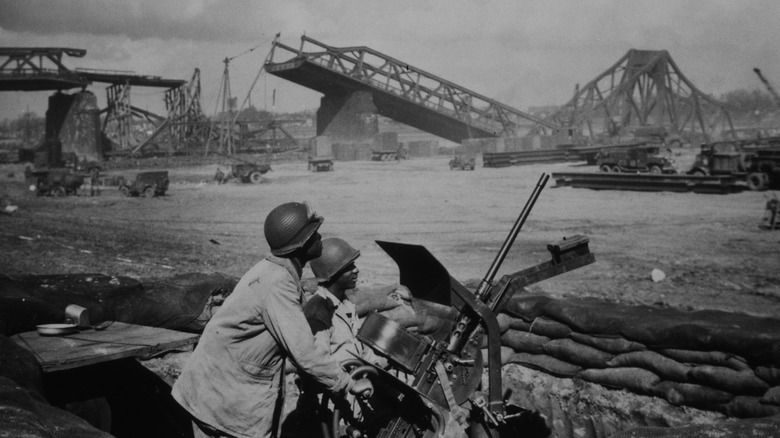
This led to desperate reactions and military strategy from the German Army and Adolf Hitler, who, toward the end of the war called for a Nazi playbook of total destruction coined the Nero Decree. The decree's directive, simply put, said nothing the Germans encountered would be spared if it could help the Allies in any way. Nothing was off limits, from railroads and communication lines to bridges and roads — any and everything would be demolished. Luckily, Hitler's Minister for Armaments, Albert Speer, never enacted the directive, and Hitler would die several weeks after that.
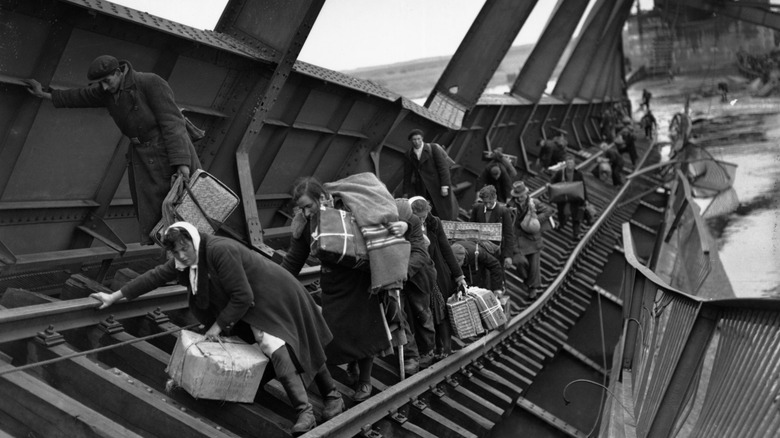
The damage from the war, even without the enacted decree, was already devastating to the countries that soldiered battles throughout WWII, leaving towns and whole regions destroyed or cut off from life-sustaining supplies. And those hundreds of bridges meant victims of the wartime conflict would desperately need to rebuild with money and supplies they were without. The aftermath remained a crucial reminder to reassess the protections of civilians and vital infrastructure. The 1949 entries for the Geneva Conventions did just that.
The Fourth Convention, Article 53, and wartime protections of infrastructure
Fred Ramage/Getty Images
The final, Fourth Convention met and penned new guidelines into the Geneva Conventions. Article 53 is the one that specifically protects infrastructure, albeit somewhat vaguely. It read, "Any destruction by the Occupying Power of real or personal property belonging individually or collectively to private persons or to the State or to other public authorities, or to social or co-operative organizations, is prohibited, except where such destruction is rendered absolutely necessary by military operations." Basically, everything is protected, unless military operations specifically render it necessary, which, unfortunately, can be construed a few different ways.
Article 53's Commentary of 1958 and Commentary of 2025, provided by the International Committee of the Red Cross, both discuss and better clarify the intentions of protections written in 1949. Each commentary further assures the protection of any property (private or public) that is necessary for human (civilian) existence, which includes not just homes and schools, but also roads and bridges. It also condemns "scorched-earth" military approaches — destroying everything and anything for the sole purpose of winning a war. The only time these properties are not fully protected is in specific wartime strategy, when the cutting off of a bridge may be beneficial in winning, as outlined in the 2025 Commentary of Article 53 section 3371. In contrast, a directive to blow up every bridge in general retaliation would be considered a war crime.