on
Diesel Hit A New Record High, Just As We Predicted Yesterday - Jalopnik
Justin Sullivan/Getty Images
Good morning! It's Friday, September 4, 2026, and this is The Morning Shift, your daily roundup of the top automotive headlines from around the world, in one place. This is where you'll find the most important stories that are shaping the way Americans drive and get around.
In this morning's edition, diesel prices are higher now than they ever have been in history as the war in Iran wages on, Volkswagen is cutting another 50,000 jobs as it looks to save itself, automakers are begging Congress to pass their Chinese car ban already, and Canada's Carney is pushing back against the Trump administration's claims that his side tanked trade talks.
If you'd like a recap of the latest auto news sent to your inbox each weekday, you can sign up for Jalopnik's free Morning Shift newsletter here.
1st Gear: Diesel hits $5.85 per gallon six months into U.S. and Israsel's war with Iran
Scott Olson/Getty Images
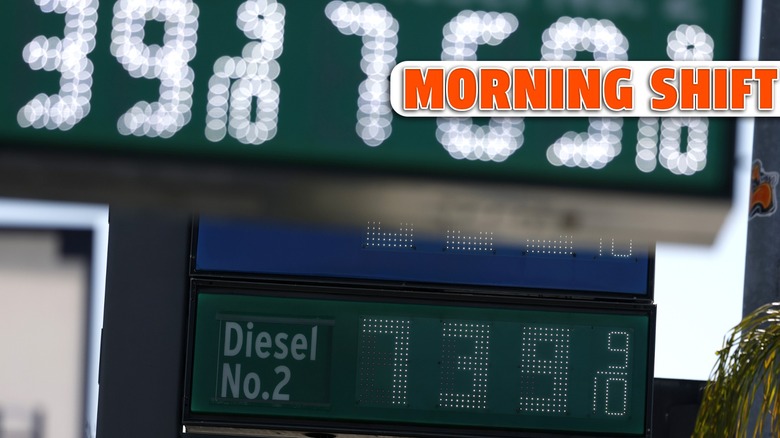
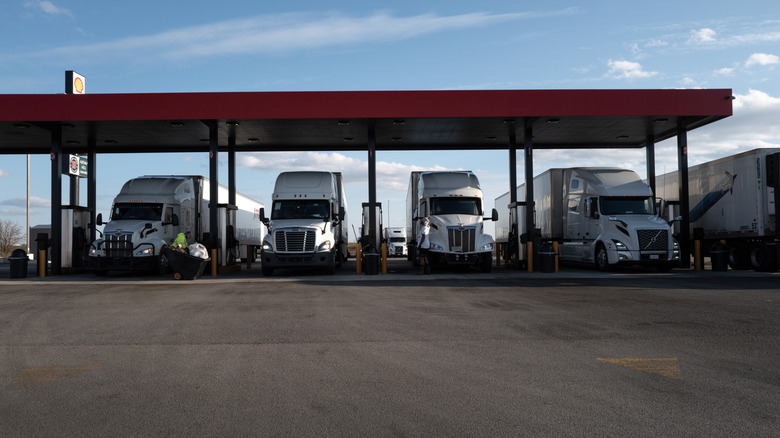
We're half a year into the U.S. and Israel's war with Iran that has severely limited oil throughput at the Strait of Hormuz, and diesel just hit a new all-time record high of $5.85 per gallon, according to AAA. It eclipses the previous all-time high of $5.82 that was set back on June 19, 2022, and while your car probably doesn't take diesel fuel, rest assured this is going to spell trouble. Since it's used throughout freight and delivery networks, high diesel prices mean higher transportation costs, and do you know who ends up picking up that bill? You and me.
Effects have already been seen at the grocery store, especially with produce, meat, and other perishables that need to be hauled in and restocked frequently. Also, you can forget about anything that needs to be harvested with diesel-powered farm equipment being cheap ever again. The longer diesel remains elevated, the longer the list of common goods that'll see prices rise.
Here's what has been driving diesel prices up, specifically. From the Associated Press:
Before the U.S. and Israel launched their war against Iran in late February, the national average for a gallon of diesel was about $3.76 in the U.S., per AAA. Prices quickly climbed as the cost of crude oil — the main ingredient in diesel, as well as gasoline — soared amid supply chain disruptions and production cuts across the Middle East, notably with most tanker traffic bottlenecked in the key Strait of Hormuz.
Despite prices cooling some during hopes for peace earlier in the summer, oil has now renewed its climb as fighting once more escalates between the U.S. and Iran.
[...]
Diesel has been more expensive than gasoline for decades, and its price has risen at a faster pace during recent energy crises. Some reasons include more limited supply, less flexibility in demand, and diesel's position in global commerce overall. Individual households may find ways to drive less when gas prices are high, for example, but there's fewer immediate substitutes for networks that rely on diesel to help produce and haul goods worldwide.
[...]
Fuel accounts for roughly 15% to 30% of the total cost of food, according to the Independent Grocers Alliance, a grouping of 7,500 global supermarkets. Because of this, higher diesel costs often result in more expensive food, although it can take a while for energy shocks to wind their way through the supply chain.
Items that need to stay refrigerated while they're transported are often the first to see prices rise, according to David Ortega, a professor of food economics and policy at Michigan State University. In July, for example, overall U.S. grocery prices were up 2.7% compared to last July, but seafood prices were up 7% and fresh fruit prices were up 4.9%.
[...]
Back in April, e-commerce giant Amazon rolled out a temporary 3.5% fuel and logistics surcharge on some third-party sellers. And United Parcel Service, FedEx and the United States Postal Service also moved to add fees on some of the packages they ship earlier in the war, citing rising operational costs for fuel overall.
[...]
Experts warn that the consequences could continue to deepen — particularly in countries in Africa and Asia, which rely more heavily on imports from the Middle East and have already been hit the hardest by energy shocks over the course of the war.
You can all take some solace in knowing that, when adjusted for inflation, diesel prices have been higher in the past. Just before the 2008 financial crisis, diesel peaked at around $4.74. That's the equivalent of $7.20 in today's money. Even 2022's record of $5.82 would be $6.56 in 2026 money. Still, I don't think that matters much to people who can barely afford to get by. I know it's not moving the needle for me.
What should move the needle is our predictive prowess. Just yesterday we said this would happen, so you can start calling us Jalopstradamus.
2nd Gear: VW CEO to cut 50,000 jobs with backing of labor leaders
aquatarkus/Shutterstock
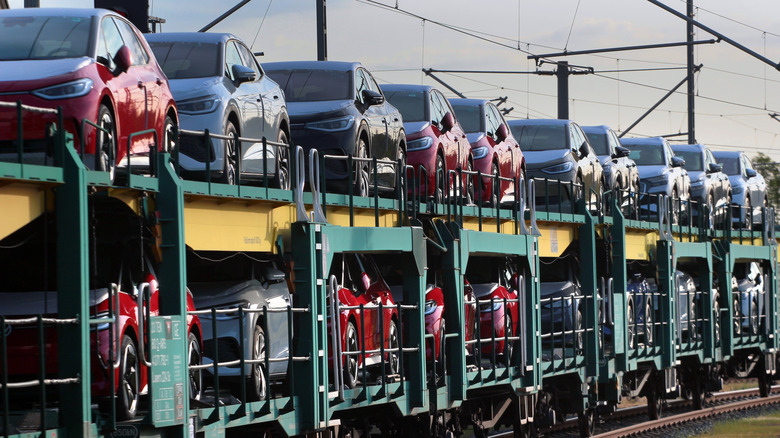
Volkswagen's supervisory board has backed a massive restructuring plan that will slash another 50,000 jobs, reduce its model lineup, and create a smaller industrial footprint — pretty much everything CEO Oliver Blume has been asking for as he looks to overhaul Europe's largest automaker. Additionally, it plans to tighten investments, planning $158 billion of capital expenditures and research and development spending from 2027 to 2031. That's a 16% drop from the investment round agreed upon last year.
The move paves the way for VW's lineup to be nearly halved by 2035, and the new job cuts represent about 8% of the automaker's global workforce. Half of the 50,000 cuts would come from Germany alone. They come as VW management looks for ways to deal with declining sales in China, high costs in Germany and underused factories. From Bloomberg:
VW's works council, which represents the company's employees, sought to temper the potential for job losses. It said the 50,000 figure is a management planning assumption of the number of staff cuts required to achieve Volkswagen's target of a 9% margin by 2030, rather than a fixed headcount goal. A spokesman for the labor group said that compulsory layoffs remain ruled out through the end of 2030 under existing agreements.
That distinction reflects the broader compromise behind Thursday's unanimous board vote, reached a day earlier than expected after weeks of increasingly bitter rhetoric.
Labor representatives had accepted that Volkswagen needed further cost reductions. But they fiercely opposed plant closures, moves to weaken co-determination — Germany's system of worker representation — and plans to separate parts of the core VW business, a carve-out which labor officials said is now "off the table."
In the final package, dubbed "Future Plan 2030," Blume won backing for the extra job cuts and broad efficiency measures. The overhaul targets annual sales of about 9 million vehicles, broadly the current level.
Workers secured assurances that no factory would be immediately abandoned and that contentious site decisions would be worked through over the coming months.
The deal stops short of closing factories right away. VW acknowledged that it currently has about 500,000 vehicles-worth of excess annual capacity in Europe.
Volkswagen says its factories in Emden, Hannover, Neckarsulm and Zwickau currently don't have competitive products planned for the future once existing models are phased out between 2031 and 2034. It's now going to explore alternative uses for the plant. Blume has said in the past that VW can't continue to carry on the same sort of massive cost base and industrial footprint it has had while still finding investments in EVs, batteries, and software.
3rd Gear: Automakers antsy that Congress hasn't banned big, bad Chinese cars yet
Wengen Ling/Getty Images
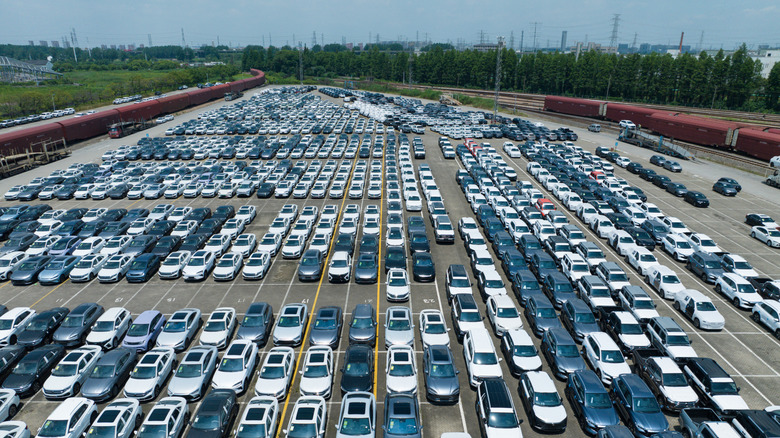
The Alliance for Automotive Innovation, a group representing major automakers like General Motors, Ford, Stellantis, Toyota, VW, Hyundai, and Honda, among others, urged Congress to pass legislation banning Chinese vehicles from entering the U.S. market before the end of the year. Jeez, guys. It's giving desperate. It's giving sad. It's giving pathetic.
I mean, it was just a couple of months ago that the Senate Commerce Committee approved legislation to toughen the government ban on Chinese automakers entering the U.S. market. Sure, there are still some hurdles to cross, but you're going to get your wish. You all need to relax or build better cars. From Reuters:
"Right now, Chinese automakers are dumping subsidized vehicles with connected software and hardware around the world," the group's CEO John Bozzella wrote Congress in a letter seen by Reuters. "This hasn't happened inside the U.S. yet, but given the scale and urgency of this threat, we urge you to enact a Chinese vehicle, software and hardware ban before adjourning this year and make this policy the law of the land."
[...]
Bozzella said passing the bill "will send a clear and bipartisan message that China's strategy to dominate global automotive manufacturing will be met with a national security response from the American government."
The Chinese embassy in Washington said it opposed the effort and said Beijing has abolished market access restrictions on foreign investment in manufacturing "and remains open to international car makers who can fully share in the dividends of China's big market. Tesla, Buick, Toyota, and Ford have been household names in China."
The Alliance in July urged the committee to consider as part of the legislation explicitly prohibiting the Commerce Department from granting specific authorizations to Chinese automakers such as "BYD, Chery, SAIC Motor and others subsidized by the Chinese Communist Party to manufacture, sell or import connected vehicles to the U.S.," according to a previously unreported letter.
Republican Senator Bernie Moreno of Ohio and Senator Elissa Slotkin, a Michigan Democrat, proposed legislation to codify a regulation imposed by the Biden administration that effectively bans all Chinese automakers from selling or building passenger vehicles in the U.S. and takes other steps to prevent China from entering the U.S. light-duty market.
[...]
In June, Polestar said the Trump administration was forcing the electric-vehicle maker to stop selling vehicles in the U.S beginning in the 2027 model year. The Sweden-based company is majority-owned by China's Geely Holding.
There are still some incredibly important things to work out. After all, as the bill is currently set up, Mercedes-Benz would be banned from operating in the U.S., and that would be a disaster for a lot of people. Its 20% passive Chinese ownership eclipses the 15% ownership threshold laid out in the bill, and Senate Commerce Committee Chair, Lyin' Ted Cruz, says the bill requires changes before it could become law.
4th Gear: Carney says trade talk collapse isn't Canada's fault
Pool/Getty Images
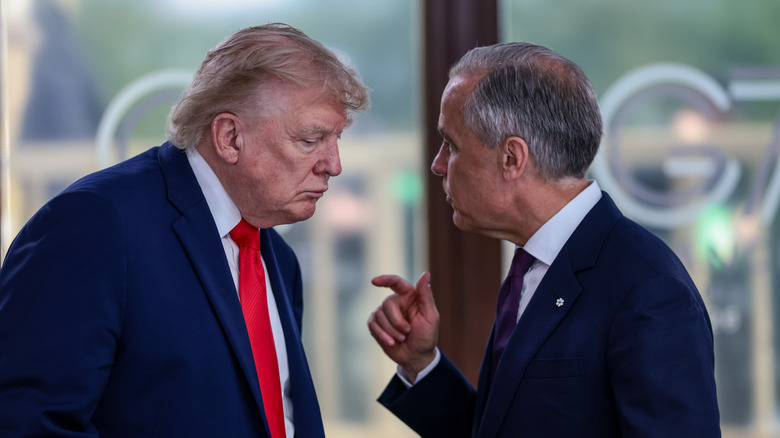
Canadian Prime Minister Mark Carney is pushing back against senior members of the Trump administration who have put the blame on his government for tanking trade talks in the final hours for political reasons back in August. Since then, tensions have escalated between the two countries.
The U.S. imposed a 50% tariff on a myriad of goods, including things like hockey sticks, cement, and honey. Canada is getting ready to act in kind. Next week, it plans to roll out its own retaliatory duties. From Automotive News:
"I don't think, with all respect, appointed, unelected cabinet members in the United States are experts on Canadian politics," Carney said at a news conference in Thunder Bay.
He was there to announce a $4.7 billion contract for Alstom's Thunder Bay plant to build passenger cars for VIA Rail. He took time to note that in the past VIA's rail cars were built in the United States, but no more, another sign of the deteriorating relationship between Canada and its southern neighbour.
[...]
Soon after Carney's comments, President Donald Trump posted on social media that it "is very good for Canadian Politicians like Prime Minister Carney to make President Donald J. Trump 'the enemy,' until their Economy collapses, then it will prove to be very bad for Politics."
"Worse than anything that has ever happened to a Canadian Politician. Just watch!" Trump added.
Canadian and American officials have been in a messaging war since negotiations were frozen, with each side blaming the other for last-minute demands that made a trade deal untenable.
Carney has said the United States "proposed new terms that were uneconomic, unfair and undermined the net benefits to Canada, calling into question the reliability of any deal."
He has cited what he described as U.S. demands that would have limited Canada's ability to make trade deals with other countries or protect the French language.
Both sides have said tariffs on medium- and heavy-duty trucks were a sticking point. Americans have said Canada's negotiators brought up issues with Trump's sectoral tariffs on that industry late in trade talks, while the Canadian side has said relief from those duties was always on the table.
Last month, Trump was asked whether the U.S. did in fact make changes in the final hours of trade talks, to which the President responded, "That sounds like me." Members of his administration were quick to do damage control, saying he was just talking off the cuff.
Reverse: They got it right the first time
 History.com
Sure, other "American Idol" winners have gone on to have fairly successful careers, but it's hard to argue that Kelly Clarkson hasn't been the most successful (and possibly most talented) out of all of them. It's rare that the GOAT comes flying out of the gate on the first go-around, but here we are. Now, excuse me while I listen to her cover of "Your Love" again. If you want to learn more about Clarkson's win, head over to History.com.
The Fuel Up
Brandon Bell/Getty Images
Diesel isn't the only fuel that's up today. Gasoline also saw prices rise across the board, though not nearly as drastically. Some relief could be coming, though, as WTI Crude Oil futures and Brent Crude prices were slightly down at the time of publication, sitting at $89 and $94, respectively.
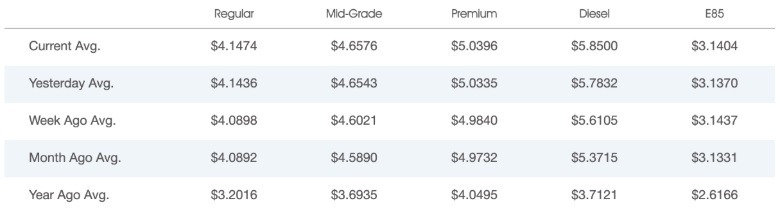
Here's where national average prices stand right now, according to AAA:
 AAA
AAA
This all shakes out to the average price of a gallon of regular gas rising another cent overnight to $4.15. Thanfully it's not the same massive jumps we're seeing from diesel prices, but any rise is still less than ideal.
On the radio: The Doobie Brothers - What a Fool Believes
If you were to ask me why I wanted to listen to The Doobie Brothers this morning, I wouldn't have a good answer for you. Sometimes the sultry voice of Michael McDonald is reason enough, ya know? Let the groove carry you into the long weekend, my friends.