on
Guide to Guest Posting and Blogging for SEO
Key Takeaways
- AI-generated pitches and posts are flooding editor inboxes, which means the bar for guest posting has moved. More than ever, writers need to lead with originality and a clear point of view.
- A short, human email that references specific recent posts is one of the best ways to get noticed.
- Choose a primary goal before you pitch. If you want backlinks, target high-authority sites. If you want referral traffic or thought leadership, target sites with engaged audiences.
- Vet every prospect on the four criteria in this guest posting guide: audience relevance, real engagement, domain authority (DA), and editorial standards.
- One well-placed contribution on a highly relevant, well-edited site delivers more authority than dozens of placements on weak ones.
- Google permits AI-assisted drafting but enforces against content produced at scale without value. Edit AI drafts heavily for originality and expertise.
AI can be an extremely useful tool for content creation, but guest posting is one area where it can pay off to pull back.
That’s because AI adoption is flooding editor inboxes with low-quality pitches and generic posts.
Lilach Bullock, an accomplished content marketer and guest-posting expert, says she sifts through 30 to 60 guest-post pitches a week. And data from BuzzStream suggests that 43 percent of posts are most likely AI-generated, which makes perfect sense given that Bullock says she approves maybe two of the 30 to 60 weekly posts she gets.
So, how do you write a pitch and a post that gets attention and makes the grade in a sea of monotone AI content?
This guide to guest blogging covers tactics that work right now. You’ll learn how to identify publications worth your time and structure posts that build topical authority and leads. I’ll also cover what’s changed in the AI era and the moves that still earn a yes.
What Is a Guest Post?
A guest post (or guest posting) is an article you write and publish on someone else’s website, usually within your industry or an adjacent one. Strategically, it’s a way to put your expertise (and your link) in front of an audience you don’t already own.
People guest post for three main reasons:
- Backlinks and SEO authority. A link from a respected site remains one of the top eight SEO ranking factors. It signals trust to the algorithms, lifting your rankings.
- Referral traffic and brand awareness. A well-placed guest post on a publication your audience already reads drives qualified visitors to your site. Those readers click through, and some of them stick around.
- Thought leadership. Bylines in the right publications can shape how your target audience perceives your credibility. In fact, strong thought leadership content during final decision-making moments can push buyers to advocate for your brand over others.
I made a YouTube video on building an effective guest-posting strategy that gives your brand these benefits and more, which you can watch below. Or you can keep reading this guide to guest posting.
Setting Your Guest-Posting Goals
The previous section covered the three reasons people guest post: backlinks, referral traffic, and thought leadership. Before you start prospecting, pick one as your primary goal, as each one points to a different kind of target site.
If your goal is referral traffic or thought leadership, you want publications with active readers and steady engagement signals (comments and shares). A site with respectable domain authority (DA) but no real audience won’t move the needle.
If you’re building backlinks, you want sites with strong root domain authority. You can check this for free using tools like Ubersuggest.
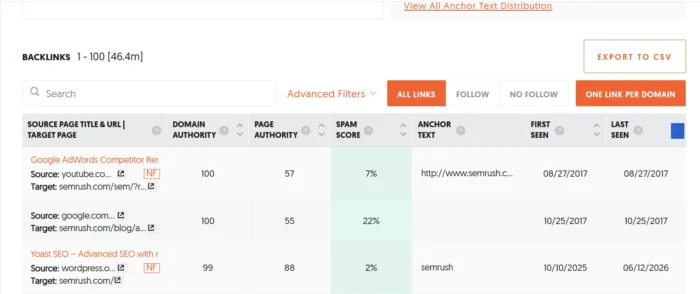
Backlinks as a goal can be a bit tricky. Google’s link spam policies explicitly classify “links with optimized anchor text in articles, guest posts, or press releases distributed on other sites” as a violation. The same policy now flags AI-generated content that doesn’t add value under scaled content abuse.
What does that mean for you?
Pitch fewer publications, and make every post earn its placement.
How to Find Guest-Posting Opportunities
With your goals set, it’s time to find guest-post opportunities. First and foremost, look for sites relevant to your niche or industry.
The blogs you target should fit the following criteria:
- The content is focused on your niche/industry.
- The audience will be interested in your industry.
- It has an engaged readership, meaning that posts have been shared socially and commented on.
- The owner is active on social media. That way, you know they’ll promote your work on their site.
If you’re selling plant seeds, for example, you’d find gardening blogs with engaged audiences of gardeners.
Let’s go a little deeper on finding the right kind of guest-post opportunities.
Google Searches
Google is a great place to start your search for guest-posting opportunities. Try any of the following queries to find blogs that accept guest posts. Replace “keyword” with a term from your industry:
- Keyword “submit a guest post”
- Keyword “guest post”
- Keyword “guest post by”
- Keyword “accepting guest posts”
- Keyword “guest post guidelines”
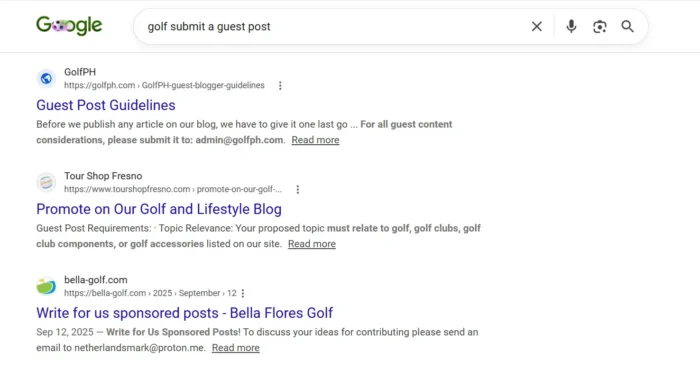
These searches should lead you to a blog’s guest post guidelines page, guest post submission page, or actual guest posts by other writers.
Prolific Guest Bloggers
Know of prolific guest bloggers in your industry? If you read enough blogs in your industry (which you should), you’ll likely have a sense for the names that repeatedly pop up in guest blogs.
To fill out your list, search the name of a prolific guest blogger, plus the phrase “guest post by.” This will reveal the publications they’ve contributed to, and those sites are likely a good fit for your guest posts, too.
If you happen to know any of these writers personally, even better. A warm introduction to an editor goes a long way.
Competitor Backlinks
If you (or your online marketing agency) have ever pulled up a backlink analysis of a competitor while working on your SEO campaign, chances are one or more of your competitors have backlinks from guest posts they have done.
With access to Ubersuggest, you can look at a detailed backlink profile of your competitors and spot any of the blog posts they have written.
Bloggers and guest posters tend to share their latest contributions on social media, which makes platforms like X and LinkedIn useful prospecting tools.
Try searching “your keyword + ‘guest post’” on X or LinkedIn to find recent guest posts in your industry. Follow the links to see which blogs are publishing guest content.
How to Vet a Site Before You Pitch
Not every site that accepts guest posts is worth your time. Before you pitch, run each prospect through these four criteria.
- Relevance. Does the publication’s audience overlap with yours? A backlink from a high-DA site whose readers aren’t your customers won’t do much for traffic or trust. Read the most recent 10 posts and ask whether the people commenting would plausibly buy what you sell.
- Engagement. Page views are vanity. True engagement looks like substantive comments, named contributors with their own followings, and posts shared on LinkedIn or Reddit with active discussion.
- Domain authority. Use a free tool like Ubersuggest to check a site’s score. A score above 40 is a reasonable threshold for meaningful link value. Anything lower may not move your rankings, regardless of how nicely written the post is. For more on building yours, see our guide on increasing domain authority.
- Editorial standards. Look up three or four published guest posts on the site. Are they on-topic and consistent in quality with the owner’s posts, or do they read like filler accepted with little oversight? Sites with loose editorial standards point to a content farm dynamic, and links from those sites carry more risk than value.
One more thing to note is that quality matters more now than it used to. Google’s March 2024 core update folded the helpful content system into its core ranking signals and set a goal to reduce low-quality, unoriginal content in search results by 40 percent. Google has actually surpassed that goal, reducing low-quality search results by 45 percent through these measures.
How to Pitch a Guest Post in 2026
This guide to guest posting finds us in an environment where editors get flooded with AI-generated pitches and can spot automated outreach instantly.
Relationship-first outreach is the new differentiator.
Pitching well starts before you open an email. Spend time on your target blog, keeping three questions in mind as you research:
- What level is the audience (beginner, intermediate, advanced)?
- Who are they (B2B buyers, general consumers, marketers)?
- What kind of content does the site favor (general concepts, deep tutorials, lists)?
Next, audit how guest posts perform on the site. Do they receive the same level of engagement as the owner’s posts? Who are the typical guest contributors, and do you fit the mold?
Before pitching, make yourself a familiar face. Spend a week or two leaving thoughtful comments on recent posts and sharing them on social, tagging the owner. Watch for natural openings to pitch as you go, such as the blog mentioning your business or asking for contributors.
Read the submission guidelines closely, too. Do they want pitches or full drafts? A specific format? An author account?
Now it’s time to personalize the email. Find the owner’s name on the About page or in social bios and use it. Don’t use generic greetings like “Dear Webmaster” or “Hi.”
Introduce yourself with a one-line credibility statement, and link to two or three of your strongest published pieces. Ideally, they’ll be ones with visible engagement that showcase the strength of your blogging formula.
Structure is as big of a deal as personalization. Open with one short paragraph referencing something specific from a recent post on the site. Pitch two or three topic ideas drawn from formats that have performed well there. Close with links to two or three of your best published pieces.
Editors recognize AI-generated outreach on sight. A short, human email that proves you’ve read the site beats a polished AI-generated one every time.
A personalized pitch might look something like this:
[Editor first name], your piece on [recent post] made me rethink [specific takeaway]. I write about [your beat] and could pitch [topic 1], [topic 2], or [topic 3]. Recent work: [link], [link]. Worth a look?
The email template below gives you an idea of what this could look like in action:
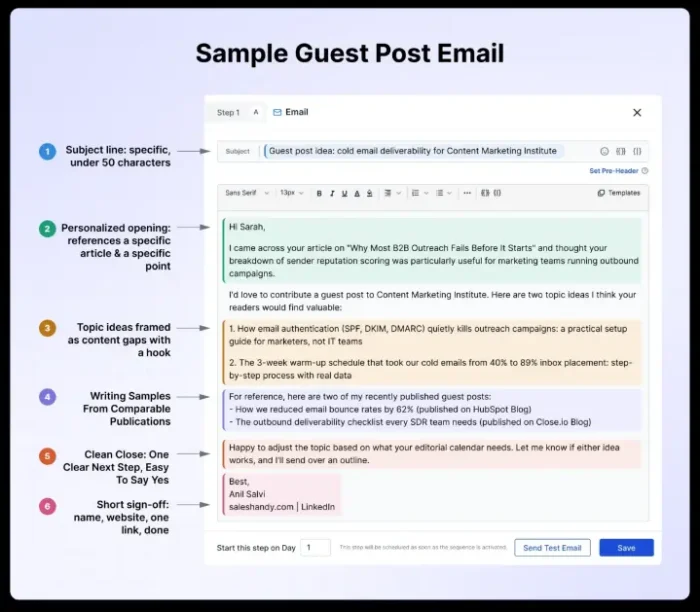
Source: https://www.saleshandy.com/blog/guest-posting-email-template/
How to Write a Guest Post That Gets Accepted
Landing the pitch is half the work. Now it’s time to back up your outreach. Here’s how to write a blog post that gets you invited back:
- Write for their audience, not yours. A great guest post isn’t about your business or services. It’s useful for someone else’s audience. Save the brand mentions for your author bio. Occasional examples drawn from your work are fine to illustrate a point, but the bulk of the post should sit somewhere other than your sales funnel.
- Match the site’s format. Take cues from the target blog’s published posts and mirror the formatting. If it runs 1,500-word how-tos with screenshots every few hundred words, structure your post that way. If it runs tight 500-word posts with one hero image, follow suit. Editors notice when contributors take the time to learn the house style.
- End with a comments call to action (CTA). Close the post with a clear question that invites discussion. Posts that generate real conversation get more visibility on the site and more reach on social. They can also score you goodwill from the editor who published you.
- Be careful with AI drafts. Using AI to help you write isn’t against Google’s guidelines, but the finished post still needs to follow its helpful content guidelines. If you start with AI, don’t submit what it gives you. Strip generic phrasing and add data and opinions that AI can’t generate. Editors and Google’s detection systems have gotten sharp at spotting thin, formulaic AI content. A draft that reads like ChatGPT writes it is a fast no.
Want to see what these rules look like in practice? The post below on ProBlogger nails all of them.

The author covers blogging as a business in great depth, clearly writing for ProBlogger’s audience rather than resorting to self-promotion. The entry matches ProBlogger’s format and closes with a simple CTA inviting people to engage in the comments section (and, boy, did they).
How to Write a Guest Post Bio That Works
No guide to guest blogging is complete without covering your guest post bio. This is usually the only place to include self-promotion links to your website, blog, product, service, or book. What you write depends on your guest-blogging goals:
- Include a link to your website. If your goal is to get strong backlinks, make sure your bio links back to your website with your target anchor text.
- Create a custom landing page. If your goal is to drive traffic to your website, then consider where you want that traffic to go. Depending on your post subject and audience, you might want to send traffic to a custom landing page or a page about a specific product or service.
- Include social profiles. If your goal is social growth, add a line at the end of your bio with a link to your top social profile and a simple follow CTA.
Keep the bio itself short. Include a bit about your background and experience to demonstrate why you’re qualified to write a guest post. Include your current job or projects that may be of interest to readers.

Guest Posting and Google: What You Need to Know
Google’s guidance on guest posting is scattered across several policy pages, which makes it easy to miss the bigger picture. Here are the relevant policies in one place:
- Large-scale guest posting for links is a spam policy violation. Google’s link spam policies explicitly classify “links with optimized anchor text in articles, guest posts, or press releases distributed on other sites” as a link scheme. The category that draws enforcement is volume-driven outreach with primarily SEO motivation.
- “Large-scale” has a specific shape. It looks like thin posts that read the same across many sites or articles that exist primarily to carry a link. Networks of guest contributions with overlapping anchor text are another glaring sign. If a placement only makes sense as an SEO tactic, Google’s systems can probably see that.
- The safe approach is editorial. Write content that earns its placement. That means targeting sites with editorial selectivity. Tag commercial links with rel=”sponsored” or rel=”nofollow” when payment is involved or SEO is the primary motive.
- AI-generated guest posts get the same scrutiny. Google’s helpful content guidance applies to everything you publish, including guest posts. Mass-produced, AI-generated content distributed at scale is a known signal under Google’s scaled content abuse policy.
The simplest rule is to write things people will actually want to read. High-quality, helpful content placed where it belongs and transparency around commercial relationships help keep you Google-compliant from the start.
How to Track Your Guest Posting Results
If traffic is the goal, you need to measure what’s coming back. In Google Analytics 4 (GA4), the cleanest place to start is the Traffic acquisition report. You can find it by going to the Reports menu, then selecting Traffic acquisition.
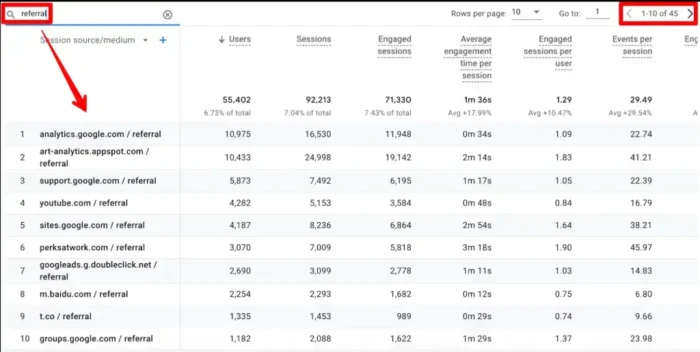
Source: https://measureschool.com/ga4-referral-traffic/
Next, add the Session source as your primary dimension and filter for each host domain you’ve guest posted on. You’ll see sessions and key events from every referral source side by side.
For deeper analysis, build a custom segment in Explorations. Pull in every guest post domain at once and review them across whatever metrics matter most: engaged sessions, conversion rate, or revenue if you’ve configured ecommerce.
Don’t stop at page views. Set up key events (GA4’s replacement for goals) to track what guest post visitors do once they land. A guest post that drives 200 visitors and zero key events is a different story from one that drives 50 visitors and five paying customers.
FAQs
What is guest blogging?
Guest blogging means writing and publishing an article on someone else’s website, usually within your industry. It’s a tactic used to build authority and reach new audiences while earning backlinks from sites your target customers already read.
How do I guest post?
Start by picking a goal: backlinks, traffic, or thought leadership. Find sites that align with that goal and vet them using the criteria in this guide. Then send a personalized pitch that references the site’s recent content. If you land the placement, write a draft that matches the site’s house style.
How do I find guest post blogs?
Start with Google searches like your niche + “write for us” or your-niche + “guest post guidelines.” You can also use tools like Ubersuggest or Ahrefs to look at your competitors’ backlink profiles and find sites that accept guest contributions.
How do I submit guest blog posts?
Read the site’s submission guidelines first. Most blogs want either a short pitch or a full draft submitted through email or a contributor form. Have your bio and relevant links ready to include.
How do I guest blog effectively?
Focus on fewer, higher-quality sites. Build the relationship before you pitch. Write for the host’s audience as opposed to your sales funnel. Then track results in GA4, so you know which placements are most worth repeating.
This guide to guest blogging contains very different information than it would have just five years ago. A lot has changed.
Conclusion
Volume pitching doesn’t work anymore. Editors filter out AI-generated outreach on sight, and Google’s systems flag content produced at scale. A single well-placed contribution on the right site now does more for your authority than 50 placements on weak ones.
Relationship building is your best bet for success. That means vetting sites carefully and engaging with their content before you pitch. Punctuate those efforts by writing drafts that earn their place on the page.
While sound guest-blogging strategies are important, guest posting is just one channel in a bigger picture. It can be powerful when done properly, but it works best alongside a strong content marketing and link-building foundation.
Use this ultimate guide to guest posting with the resources on my YouTube channel and the rest of the NP blog. There’s enough information here to get you going, but my team is more than happy to help you build a plan if you ever get lost along the way.
Are You Using Google Ads? Try Our FREE Ads Grader!
Stop wasting money and unlock the hidden potential of your advertising.
- Discover the power of intentional advertising.
- Reach your ideal target audience.
- Maximize ad spend efficiency.