on
Is There An Ideal PSI When Pressure Washing Your Car? - Jalopnik
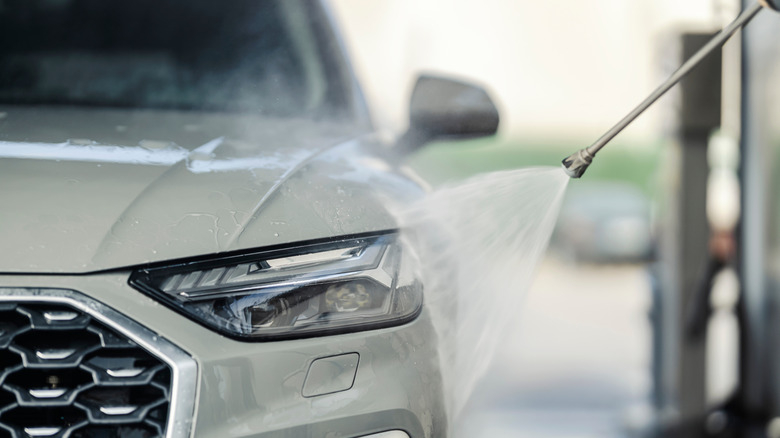
Dusan Petkovic/Shutterstock
Washing a car is a considerably quicker task with a pressure washer than by hand. However, using a pressure washer haphazardly can turn a routine cleaning job into an expensive repair, as the concentrated jet of water can damage paint, clear coat, rubber seals, and exterior trim, particularly when the nozzle is held too close or if the pressure is dialed in too high.
The pressure at which water is expelled from a pressure washer is measured in pounds per square inch (psi), which refers to the force exerted over a one-square-inch area. When cleaning a car's painted surfaces, a water pressure of 1,200 to 1,900 psi is favorable, but that's not all there is to pressure washing. In addition to the psi figure, variables like water flow rate, nozzle width, spray distance, and technique collectively determine how aggressively the water hits the bodywork, and understanding how they work together makes it much easier to get a thorough clean with zero unnecessary damage.
PSI is crucial, but there's more to consider
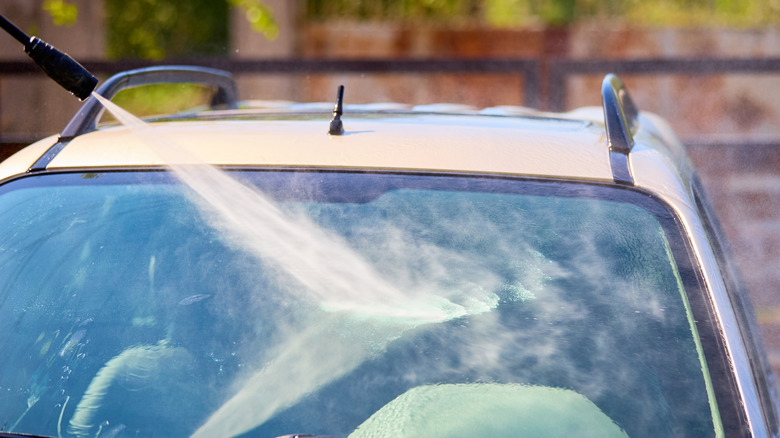
Gagarin Iurii/Shutterstock
When it comes to water pressure, a higher psi number produces a more aggressive water spray, but that doesn't automatically mean better cleaning. For painted surfaces, sticking within the 1,200 to 1,500 psi ballpark is a conservative approach, but in cases of extreme dirt buildup, the pressure can be dialed up to a maximum of 1,900 psi.
Water flow is essential as well, and is measured in gallons per minute. As the term suggests, this unit indicates how much water the pressure washer shoots out every minute, and a higher flow rate — 1.5 to 2.5 gallons per minute is an ideal range — can help loosen dirt from the bodywork without requiring extreme levels of pressure. In other words, a pressure washer with the appropriate water pressure and adequate flow rate can be more useful than one that simply produces a very high-pressure stream.
Nozzle width also plays an important role here. A nozzle in the 25- to 40-degree range makes for a relatively broad, gentle spray that is better suited to painted surfaces. Narrower nozzles (0 to 15 degrees) concentrate the water stream into a smaller area and increase the risk of damage, so pinpoint and turbo nozzles are best avoided when washing a car.
Distance and technique can make or break the wash
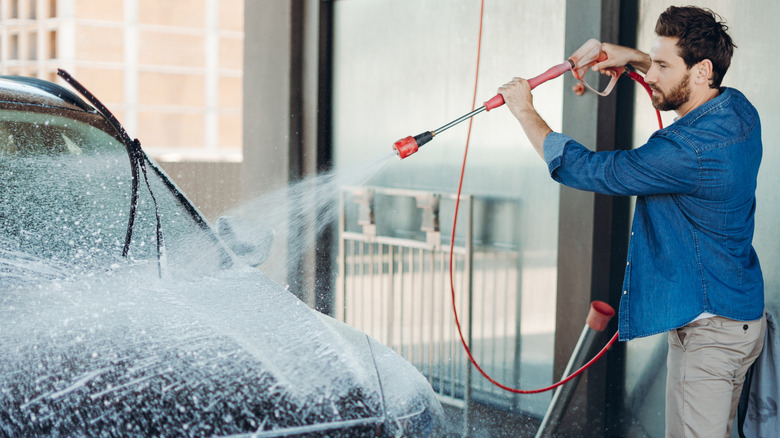
Mariia Vitkovska/Getty Images
A pressure washer operating within reasonable bounds of water pressure, flow rate, and nozzle width can still cause damage if there isn't enough distance. The safest approach is to start from around 12 to 18 inches away and gradually move closer only when necessary, instead of immediately going all-out with the nozzle near the paint. Keep the wand moving in smooth passes and never focus the spray on one spot.
A gentle rinse is also a good start, as it removes loose dust, grit and debris. After that, foam can loosen the remaining grime before the pressure washer rinses it away. This reduces the temptation to increase pressure simply because stubborn dirt isn't moving.
Different parts of the car also require different levels of caution. Wheels and tires can generally tolerate somewhat more pressure than painted panels, but valve stems, wheel weights, brake components, center caps, and painted finishes can still be damaged. Trim pieces, badges, moldings, and rubber seals are even more sensitive, so avoid spraying directly into their edges or seams.
Older cars deserve additional caution because paint, plastic, and rubber components may have deteriorated with age. If an older car has peeling paint, loose trim, damaged decals, and compromised seals, cleaning it by hand is ideal instead of pressure washing.