on
Report suggests the US gov may have 'urged' Apple into Intel chipmaking deal to avoid tariffs, at almost the same time it took a $9 billion stake in blue team stock
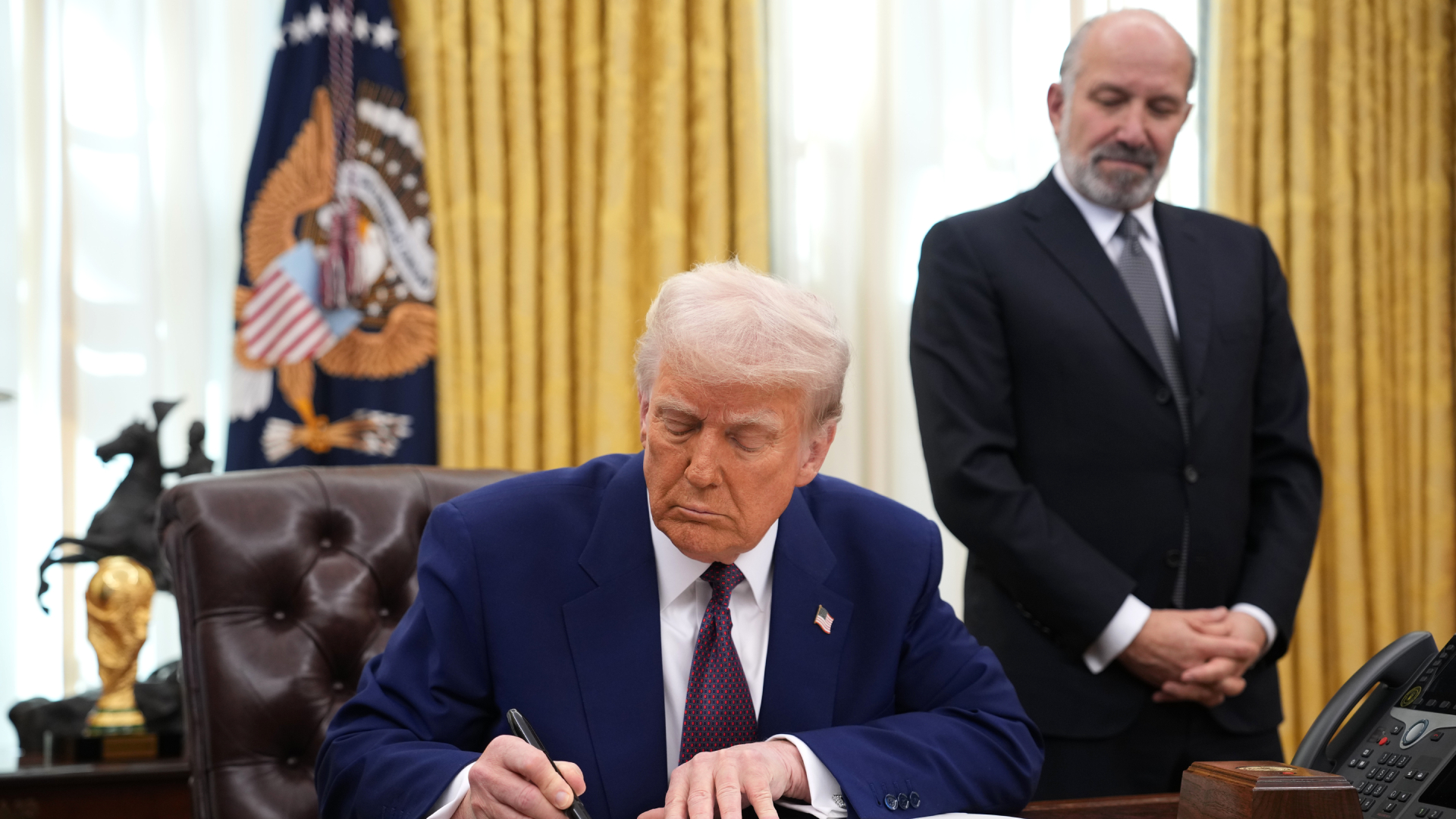
A report from The Wall Street Journal tells the tale of Tim Cook's visit to the White House last summer, in which the Apple chief attempted to persuade the administration to abandon plans to impose tariffs on 100% of all semiconductor imports.
Apple was eventually granted an exemption to the tariffs, in return for a commitment to invest $100 billion into US manufacturing efforts. However, the WSJ says that US president Donald Trump and US commerce secretary Howard Lutnick also "urged" Cook to use Intel's manufacturing plants to make some of its chips.
Later that same month, the US government converted $9 billion in federal grants into a 10% stake in Intel, making it the company's largest shareholder. Trump announced in June of this year that Apple had agreed to build chips with Intel in the US in a Truth Social post, although neither company has issued a formal confirmation of the deal beyond a reported preliminary agreement.
According to the WSJ, Apple plans to have Intel make chips for Mac laptops and iPhones, according to one of its sources familiar with the negotiations.
Intel's stock price, meanwhile, has risen significantly over the past year, more than quadrupling since CEO Lip-Bu Tan took over the reigns in March of 2025. As the outlet reports, much of that good fortune can be attributed to CPU demand for AI servers, but the WSJ argues that the Trump administration's "financial and strategic patronage" has been "the more crucial factor."
Tan is said to visit Washington around once a month to meet with officials from the US Commerce Department, and "talks on the phone regularly" with Lutnick. Meanwhile, Bill Frauenhofer, described as the US government's "chips czar" is said to receive a quarterly briefing from Intel CFO David Zinser, with members of his staff meeting regularly with Intel executives.
All of which is to say, Intel's links with the US government seem to run very deeply indeed, after previous years of financial strife. And Apple, for its part, will be keen to secure chip manufacturing capacity for its products beyond that of TSMC, given the Taiwanese chip giant's capacity constraints in the middle of the AI boom.
Keep up to date with the most important stories and the best deals, as picked by the PC Gamer team.
So, the deal between the two makes a lot of sense. However, this arrangement certainly fits with the Trump administration's push to bolster chip manufacturing on US soil, and given the federal investment in Intel, it also appears to be a good bet financially for all involved.
Not least of all Apple, which, if these reports are correct and the deal goes ahead, managed to avoid some major tariffs in the process. Make of that, as they say, as you will.
Andy built his first gaming PC at the tender age of 12, when IDE cables were a thing and high resolution wasn't. 26 years later (yes he's getting old), he now spends his days writing about and reviewing graphics cards, CPUs, keyboards, mice, gaming headsets and much, much more. You name it, if it's PC gaming hardware he'll write words about it, with opinions and everything.