on
RFK Jr urges Alzheimer’s screening but blunts key panel that could drive research
The US health secretary, Robert F Kennedy Jr, has called for better Alzheimer’s screening – but a critical federal panel that might have helped researchers find practical ways to do that has been prevented from meeting for more than a year.
The panel, formally called the US Preventive Services Task Force (USPSTF), had planned to issue a recommendation on screening for cognitive decline this year, alongside 13 other topics as varied as autism screening and food allergy prevention.
“The evidence for cognitive screening for dementia is not great,” said John Ruiz, a professor of clinical psychology at the University of Arizona and a recent member of the panel.
The taskforce is a group of expert volunteers who assess preventive services for health insurance coverage. The Trump administration has prevented the taskforce from meeting since March 2025, a political appointee fired two panel chairs, and the administration has so far failed to appoint new members. Ruiz rotated off the taskforce in January.
“You get 10 neurologists, you get 10 approaches on how they’re going to assess that – there’s no consensus. The evidence is mixed at best,” said Ruiz. “The taskforce’s response has been to say, ‘Put more funding into building the evidence, allow researchers to do screening studies to find out – what does the evidence say about screening tools?’”
The USPSTF recommendations can help inform future research, said Ruiz, as their draft recommendations are open for public comment and frequently receive substantial input from research communities. Alzheimer’s researchers also reported their work has been “slowed” by the health department’s policies, including funding disruptions.
In April, Kennedy criticized the panel and called for better Alzheimer’s screening in the same breath. “Screening for prevention is absolutely critical,” said Kennedy in congressional testimony, responding to a question from Republican House member Vern Buchanan of Florida.
“We are forming now the USPSTF, which is the committee that decides on new procedures and interventions that need to get [Centers for Medicare and Medicaid] compensation. And that committee has been lackadaisical and negligent for 20 years,” Kennedy said, adding later: “We’re making huge investments at NIH and elsewhere, and doing the kind of science that we need to do better screening for Alzheimer’s.”
At the time Kennedy made the statement, the health department had prevented the USPSTF from meeting for more than a year and failed to fill at least eight vacancies (the panel usually has 16 members). A month later, a political appointee, director of the Agency for Healthcare Research and Quality Dr Roger Klein, fired two taskforce chairs.
Emily Hilliard, a health and human services department (HHS) spokesperson, said: “HHS remains committed to advancing research in Alzheimer’s disease and other serious health conditions. [National Institutes of Health] remains the federal government’s largest funder of Alzheimer’s research, CMS is expanding access to coordinated dementia care through the nationwide ‘Guide’ model, [the Food and Drug Administration] continues to oversee new Alzheimer’s therapies and diagnostics.” She added that other federal agencies “are carrying out programs focused on prevention, workforce development, caregiver support and dementia-capable communities”.
An estimated 7.4 million Americans 65 and older live with Alzheimer’s, the most common form of dementia. Although older people account for the vast majority of cases, it is not considered a normal part of aging. About 200,000 Americans in middle age are also diagnosed with the disease, according to the Alzheimer’s Association.
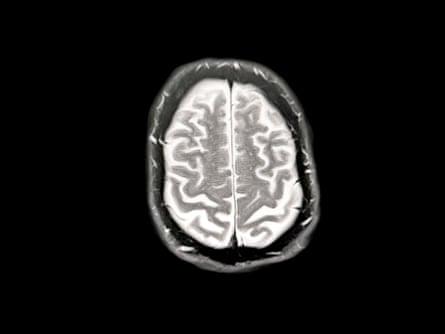
Alzheimer’s screening typically relies on the appearance of symptoms. Patients are then subjected to cognitive testing, such as recall of words or phrases over the course of a conversation, and referral to a neurologist and potentially imaging, such as with an MRI, to reach a diagnosis.
There is no major treatment for Alzheimer’s. That makes the search for reliable screening urgent, since it could lead people to undertake health lifestyle changes to delay the onset of cognitive decline.
“There’s not like where you might go get a mammogram for breast cancer screening – there’s nothing like that set up for Alzheimer’s disease or cognitive impairment,” said Allison Aiello, a professor of health longevity and epidemiology at Columbia University, whose population studies are seeking biomarkers and cognitive tests that could detect cognitive changes as early as 24 to 44.
Kennedy’s criticism of the USPSTF was not his only promotion of Alzheimer’s screening. Also in April, Kennedy told the House energy and commerce subcommittee: “It’s almost regulatory malpractice that we do not have early screening already.”
Kennedy did not refer to a specific test, but some researchers believe Kennedy might be speaking about a new blood biomarker test for P-Tau217, a diagnostic tool approved in May last year. It is cleared for people older than 50 experiencing signs and symptoms of Alzheimer’s – not screening. The Alzheimer’s Association has promoted the blood tests as a “mammogram moment”, but researchers have urged caution.
“I disagree with [Kennedy’s] assertion we should be rolling those out broadly,” said University of Pittsburgh Alzheimer’s Disease Research Center co-director Ann D Cohen, also an associate professor of psychiatry. “They have very good diagnostic – not prognostic – value.” Further, one study suggested the tests could be subject to many false-positive results in the real world.
Importantly, Cohen’s own work advancing screening tools for Alzheimer’s Disease was spiked because of other Trump administration policies. The Guardian reported in March 2025 that 14 of the US’s 35 Alzheimer’s disease research centers (ADRC) nationally were impacted by funding freezes, making it difficult to hang on to staff and even clinical trial patients.
One of those centers was Cohen’s – her funding did not clear until the “end of last summer”, which forced her to use “several hundred thousand dollars” in philanthropic funds once earmarked to advance blood biomarker tests.
“We had to cancel that because we had to use those funds to keep our clinic open,” said Cohen, who added: “There’s no way around the fact that science has been slowed down.”
Aiello also made a distinction between the emergence of tests and rolling them out broadly – the kinds of questions typically considered by the USPSTF.
“If we can measure these kinds of things we know are associated with cognitive impairment and Alzheimer’s in older age, we might be able to find small nuanced changes that characterize patterns that lead to change in older life,” said Aiello, citing the potential positive impact.
“Should we be doing that at every primary care visit? That’s a whole other question – and that’d be something you’d have to talk to a policy person about.”