on
‘Shoved the tube so hard it tore my nose’: Kurdish film-maker recounts ‘inhumane’ ICE force-feeding
In June 2025, a sluggish and thin Gabar Choli, with sunken temples and bones visible under his skin, braced himself for the immigration detention center guards to charge into his cell once again.
Choli was in a solitary confinement medical cell inside the Port Isabel service processing center, an Immigration and Customs Enforcement (ICE) detention facility in south Texas where immigrants arrested in Donald Trump’s anti-immigration crackdown are detained.
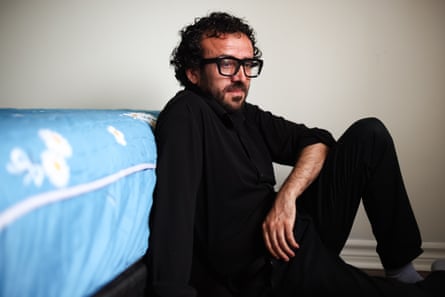
Choli, a 40-year-old Kurdish asylum seeker with a thick beard and long dark hair, had been on hunger strike for over two months, demanding improved conditions for detained immigrants and to be released or deported. That day in June 2025, Choli’s nose was swollen, his throat hurt and he could still taste blood from previous days of treatment for which he never gave his consent, he said.
The film-maker and activist for an independent Kurdistan has spoken out for the first time, talking exclusively to the Guardian last week from Canada about the ordeal in the United States that he said “broke him”.
He recounted the vile routine as the detention center guards would rush towards him and wrestle him to the concrete cell floor, shackle his wrists and ankles, and drag him to the detention center infirmary. There, the guards pinned Choli on a bed while medical staff forcibly inserted a feeding tube through his nose and down his throat, and pumped nutritional liquid into his stomach. Choli was being force-fed by ICE.
“Two guards would hold my feet; two hold my hands; one hold my head – and they would shove tubes in my nose,” Choli said. “It’s not easy to be wrestled to the ground twice a day by men that are stronger than you. And you just take it. You have 60cm of tube going through you and you just feel every centimeter of it.”
An investigation by the Guardian, based on dozens of pages of court records and interviews with medical and legal experts, found that Choli was quietly and intermittently force-fed by ICE for nearly eight months – from late May 2025 until he was deported in January.
He was not alone – he even met a fellow hunger striker, an Afghan man the Guardian also learned about, as they were both forcibly fed in the same ICE facility.
Force-feeding is an excruciating and traumatizing process that has been widely condemned by human rights organizations as torture. For Choli and others, refusing food is a last resort to protest against harsh conditions and lack of progress in their immigration cases, but sometimes brings only harsher conditions.
“I understood the necessity of making a stand for what was right,” Choli said, speaking by phone with the Guardian, talking in a very matter-of-fact way about his recent experience. At various times, Choli would sarcastically chuckle, almost incredulous now when remembering the officials’ actions. “I was respectful. I just told them I am protesting for humane treatment, nothing else. But they were determined to break me,” he said.
Choli suffered swollen sinuses, a damaged esophagus, stomach problems and psychological torment, according to court records and his own account.
“It just broke me, mentally broke me,” Choli said gravely. After sometimes twice-daily sessions “they would take me to [a] solitary cell and I would just choke on my blood and drink the blood from inside [my throat],” he said, describing how the feeding tube would scrape him inside. Many of his court records remain sealed and he did not have a lawyer – and medical staff there did not respond to the Guardian’s reporting – so some details in Choli’s account remain uncorroborated.
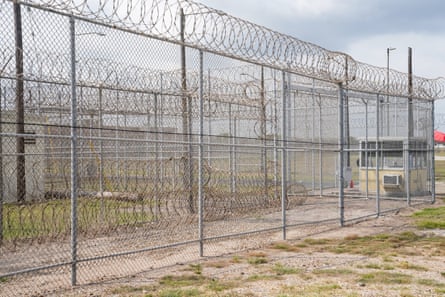
The Trump administration has not officially acknowledged force-feeding anyone in immigration jails. But an investigation by the Guardian found that since January 2025, the administration used court orders in plans to subject at least 10 hunger strikers in ICE detention to involuntary medical procedures, including force-feeding.
However, it has since emerged that the number is even higher. Sources with the Department of Homeland Security (DHS), ICE’s parent agency, later told the Guardian that between January 2025 and 4 August 2026, ICE received “a court order for involuntary treatment for 18 hunger strikers”.
The DHS did not respond to questions concerning Choli’s specific case, but a spokesperson said in a statement: “ICE respects an individual’s right to refuse medical treatment where appropriate. However, when an individual’s medical condition presents a serious risk of death or permanent harm, or when other compelling legal or operational interests are implicated, ICE may seek judicial authorization for appropriate medical interventions consistent with applicable law.
“Any involuntary medical treatment is undertaken only pursuant to legal authority and under the direction of qualified medical professionals,” the spokesperson added.
The US attorney’s office in the southern district of Texas did not respond to a detailed request for comment.
“This likely amounts to torture,” said Dr Chanelle Diaz, an assistant professor of medicine at Columbia University’s medical center, in New York. Diaz has medically evaluated other ICE force-feeding cases and advocated for hunger strikers’ release. She reviewed the limited court records available for Choli’s case, at the Guardian’s request. “I would say that it’s even difficult to capture the degree of risk that he was being put at, long-term,” she said.
Choli, a deeply religious Muslim, had been living in Vancouver, where he was a film-maker and activist campaigning for an independent nation of Kurdistan, having come to Canada in 2007 from what he considers occupied territory in Iran. His life was and is complicated. He said he had previously served nine months in prison in Canada following a 2012 drug-smuggling charge and court records show the case was related to receiving just over one kilogram of opium in the mail from Turkey.
Then his activism for Kurdish independence drew death threats and in 2022 he crossed the border into the US in Blaine, Washington, and requested asylum. He was quickly released by the authorities and made his way to Los Angeles to try to pursue his ambitions in film while his asylum case played out, attending regular mandatory check-ins with ICE and qualifying for a work permit. Court records say a judge denied his asylum claim in 2024 but granted him protection from deportation to Iran.
Then Donald Trump returned to the White House after campaigning on a promise of mass deportation and, at a 25 February 2025 check-in with ICE, Choli was arrested. He was first sent to the Desert View Annex in California, an immigration detention center that has been repeatedly criticized for substandard conditions. While in detention, Choli says he was pressured by ICE officials to sign a deportation order to be sent to Iran. He refused and after demanding better conditions and a fairer resolution to his immigration case, he began his hunger strike on 24 March, court records show.
“I am not suicidal,” Choli would later write in a declaration to a federal judge. “I am using hunger strike as the only available option to protest the abuse and mistreatment.”
Choli was then transferred to the privately run Port Isabel facility in Texas for a “higher level of medical care”, an ICE court declaration says. There, Choli refused to end his strike and was placed in a solitary medical cell, which ICE describes as administrative segregation, meaning he was under frequent observation by medical staff. It features a perpetually illuminated cell, alongside other cells in that unit with suicidal or other medically vulnerable detainees.
Almost 10 days later, ICE sought their first court order to force-feed Choli. He broke his strike, believing the federal court’s involvement could help his immigration case move along. “God opened a door for me,” he said he was thinking, and wrote a letter to the federal judge requesting assistance.
But three weeks later, Choli said he learned the case was closed and no one had responded to his letter. Furious, he stopped accepting meals again. On 23 May 2025, ICE and the US attorney’s office for the southern district of Texas filed a second request for a court order to conduct involuntary medical procedures, including force-feeding. According to ICE’s request, a social worker at the detention facility evaluated Choli and found he was “operating under his own free will”.
The World Health Organization and other medical organizations “have said that it is an individual’s right to decide to go on hunger strike, as long as they are of sound mind – which he was”, Dr Parveen Parmar said about Choli after reviewing some of his records shared by the Guardian. Parmar is a doctor and expert with Physicians for Human Rights, a New York-based advocacy group. Like Diaz, she has provided expert medical testimony in other ICE force-feeding cases and also reviewed the limited court records available for Choli’s case.
“Patient autonomy is one of the core tenets of medicine,” Parmar added.
But as Choli’s hunger strike went on, it threatened his health and also, in the government’s opinion, posed “a serious threat to the security and good order” of the facility, ICE argued in court filings. “The public interest is served by not allowing [Choli’s] attempts to manipulate the immigration system and by maintaining prison and inmate safety and security,” the case documents say.
Such filings not only contradict federal silenceor denials about hunger strikes going on intermittently in various ICE detention facilities, but they appear to speak to a desire by authorities to limit such protests from spreading.
In Choli’s case, doctors working for ICE, Dr Benjamin Salinas and Dr Shauna Kincheloe, also submitted declarations to the court last May requesting the procedures take place – and continue. One day later, the federal judge, Rolando Olvera, ordered Choli to be force-fed, without hearing from Choli himself.
When contacted, Salinas told the Guardian: “Thanks for reaching out, but I’m not interested.” Kincheloe did not respond to requests from the Guardian for comment. Olvera’s assistant declined to make the judge available for comment.
“Immigration detention is civil, it is not necessary,” Diaz said, referring to the fact that many alleged immigration violations, such as remaining in the US without legal status, involve civil, not criminal law. She said that ICE’s court arguments “feel like a false dichotomy”, adding that detained immigrants “could be released, that is always a choice. And that should be the default, not force-feeding.”
In most cases seen by the Guardian, federal judges will often approve ICE’s requests without hearing from the hunger strikers first, or their lawyers – those that have one.
Choli did not have an attorney during his detention and the entire force-feeding proceedings, records show, and was not provided with one by the government.
“In my view, those proceedings shouldn’t continue without the person having legal representation if they don’t have it already,” said Rebecca Sharpless, the founding director of University of Miami’s immigration clinic. Sharpless is not familiar with Choli’s case but represented an ICE hunger striker in 2021 who was ordered force-fed. “It makes a big difference when people understand that there are people who are fighting for them – both in terms of their legal case but also their right to make choices about their body.”
The very first time Choli was force-fed, he had voluntarily gone with the guards to the detention center’s infirmary. But after experiencing the painful and traumatic process for the first time, he began to resist.
“First I did not resist. But after I saw they were torturing me, I started protesting: ‘I’m not coming with you people,’” he said.
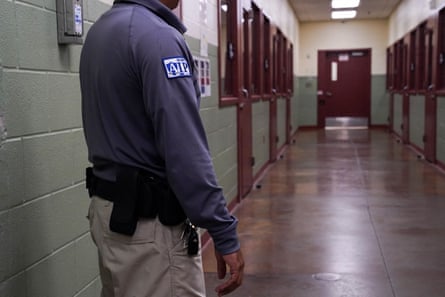
Then the guards, employees of the private prison company Akima Global Services, “started wrestling”, he said. Many ICE detention centers are run by private US contractors. Akima and its parent company did not respond to detailed requests for comment.
During the first days of Choli’s force-feeding, his nose and throat were swollen from the repeated tube insertions and removals, according to Choli and court records. He recalled an occasion in which, while being restrained, an ICE nurse “shoved the tube so hard” that “he tore my nose from the inside”. His nose bled for days, Choli wrote in a declaration to the court recounting the incident.
Parma of Physicians for Human Rights said repeated force-feeding can produce such symptoms and is “just inhumane from beginning to end”.
The rapid administration of nutrients after Choli had been starving himself also triggered stomach problems. During one early session last June, Choli said he immediately had diarrhea. He was then taken to a cell with no toilet, he said, where he further defecated on himself.
“I kept looking at my soiled body and clothing and went on crying,” Choli wrote in the declaration to the judge. “I cried for being objectified and inhumanely treated, for seeking a humane treatment.”
Weeks passed and Olvera, the judge, continued to extend the force-feeding order. Choli, with swollen sinuses, presented his declaration to the court at one hearing in mid-June, telling Olvera he could not afford a lawyer and requested a court-appointed attorney.
Olvera denied Choli’s request, writing in his court order that attorneys are not guaranteed in civil proceedings and that, even if Choli had one, it would be of no use – he would continue to grant force-feeding orders.
The twice daily process became a grim routine.
Weeks turned to months. At one point, Choli recalled a guard’s rough treatment injuring his ribs, making breathing painful for weeks. At another, guards who were restraining him “pressed so hard on my shoulder, I thought my chest was going to break in half”.
“I lost my breath” and he heard the doctor say, “‘Take him to the hospital, he’s dead.’ [Then] I completely went ‘out’,” Choli said in an interview.
Another time he recalls that despite his warnings a medical staffer incorrectly inserted the tube and it entered his lung, causing him to choke and then cough that end of the tube up into his mouth.
Choli remembers that as he was passing out, he “lost [his] senses” and vaguely remembers “reaching for [the guard’s] hand with my mouth”. The DHS, ICE and Akima did not respond to this specific allegation.
Choli said that at one point he made a deal with the facility staff: on Fridays, he agreed to drink the nutritional liquids if they allowed him to pray with other detainees. “That was my opportunity to socialize,” Choli said, calling those Fridays his “peace days”.
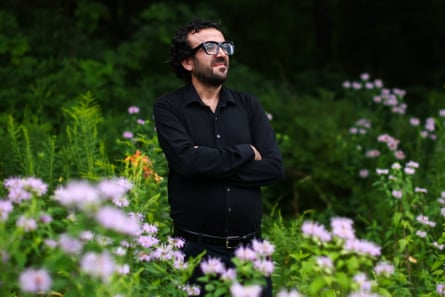
Late October rolled around. It was Choli’s birthday and, incredibly, he recalls that Kincheloe, one of the facility doctors, and other nurses sang “Happy Birthday” to him in Spanish. The Guardian has not been able to verify this detail. Choli does not remember whether he drank the nutritional liquids that day or was force-fed.
“In Choli’s case, where he was force-fed for eight months, you’re looking at easily over 100 NG tube placements, possibly over 200 … that is just not medical care, that is torture,” Diaz said, referring to nasogastric tubing.
ICE finally deported Choli to Canada on 6 January this year, where he reunited with his siblings who also live in Canada.
He told the Guardian how, the next day, he nervously ate his first solid meal in months, a small, simple salad. He was fine, but his jaw hurt for days.
“It may sound strange, but I had to learn how to eat [again],” Choli said. He is still struggling today, physically and mentally, but hopes that speaking out may help others in ICE detention.
“The price of [the hunger strike] was my life,” Choli said in an angry but level and determined tone. “The price of it was my kidneys, my gallbladder. My intestines. My being. My bladder, you know, is damaged. Every time I twist and turn, I feel pain. But this is the price you pay for making a stand for what is right.”
Does he blame Trump?
“Trump is just one person,” he said, indicating his problem is with the broader treatment of immigrants and refugees by the US. “Trump is not here torturing me.”
ICE and the US attorney’s office requested Choli’s force-feeding court case be dismissed in January, saying he was no longer in their custody. An envelope addressed to Choli, containing the dismissal notice, was sent to the Port Isabel detention center. The envelope was returned to the court.
“Return to sender”, “Not here,” the envelope read.
-
Read more from our Force-fed by ICE series