Naked mole-rat queens produce an odorous chemical that ensures that only they can reproduce
An international team led by Dr. Gary Lewin, group leader of the Molecular Physiology of Somatosensory Perception lab at the Max Delbrück Center in Berlin, has discovered that the queens of naked mole-rat colonies release a volatile compound called isopropyl myristate, which induces temporary infertility in all other females in the colony.
Desert dust in Europe is increasing with implications for health and solar energy installations

While particulate matter air pollution from human activity in transportation, households and industry is decreasing in Europe, thanks to strict regulations, another source is developing in the opposite direction: desert dust.
New study pinpoints Europe's most critical wetlands for climate action

Wetlands have shaped human life in Europe since ancient times. These ecosystems provided essential resources and safe havens for plants and animals, and in many regions they also held spiritual and ritual significance. For millennia, wetlands covered vast parts of the European continent.
We’re finally learning what happens to gifted children in adulthood | New Scientist
Gifted children are exceptionally talented or intelligent for their age Simbie Yau 
Lady Gaga may seem to have little in common with Mark Zuckerberg and Sergey Brin, other than being extremely successful. But there is a connection: all three were deemed gifted in childhood.
Healthier, more sustainable diets could reshape global agriculture: New study shows by how much
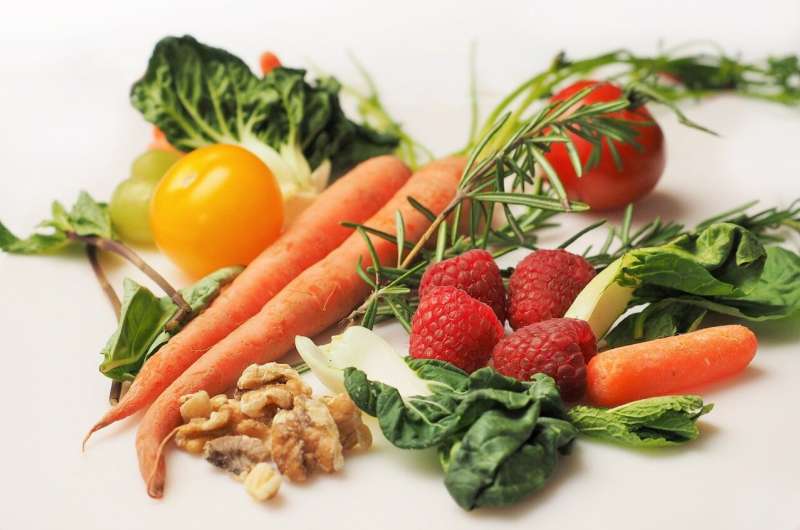
There is a clear need to shift toward healthier and more sustainable food systems. According to the 2025 EAT-Lancet Commission Report, global adoption of a flexitarian Planetary Health Diet could prevent around 15 million premature adult deaths per year.
Risks of solar storms may be underestimated, warn researchers

The effects of extreme space weather may be larger than previously thought, research in the journal Nature reveals. The paper, titled "Regression to the mean can explain saturation of geomagnetic storms," is led by Dr. Nithin Sivadas of NASA's Goddard Space Flight Center and co-authored by Dr. Maria Walach from Lancaster University.
Biodiversity boosts productivity most during extreme drought in drier grasslands

When extreme drought strikes, drier grasslands receive the greatest productivity benefit from biodiversity. By contrast, forests did not show the same context-dependent pattern under drought, according to a new global synthesis of 75 biodiversity experiments. Researchers from Yokohama National University published their results in Nature Ecology & Evolution on July 15.
Generative AI's power sparks fears of dumbing humans down

Generative AI chatbots capable of writing emails and computer code, translating, organizing a trip or coming up with gift ideas are now readily available, prompting some to ask whether human brainpower could suffer for lack of use.
The secret to hydrogen's quantum behavior lies in symmetry

As interest in clean hydrogen power grows, so does the need for safe storage and transportation materials. One such material, vanadium, is a leading candidate because it readily absorbs hydrogen and allows it to move through its crystal structure. However, hydrogen displays varying behavior in the presence of vanadium, with the underlying cause remaining unclear.
Wildfires expose millions in the Midwest and Northeast US to dangerous smoke

Heavy smoke from several large wildfires blazing in Canada and Minnesota is expected to engulf large swaths of the Midwest and Northeast U.S. this week, exposing millions of people to dangerous air pollution.